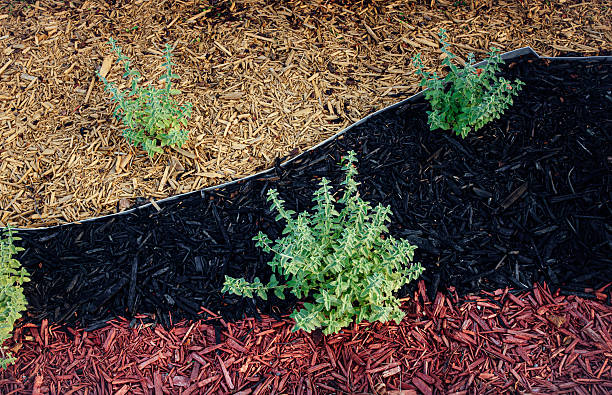
Every spring, at garden centers and in landscape quotes everywhere, homeowners hit the same surprisingly consequential decision: black, brown, or red? Mulch color feels like a small choice — until it's installed across every bed on the property, framing the house in hundreds of square feet of it, for at least a year.
And it is consequential: mulch color changes how your plants read, how your house presents, how hot your beds run, and how "fresh" the landscape still looks in August. The good news is that mulch color follows a few reliable design and practical rules — and once you know them, the choice picks itself. Here's the complete guide to choosing between black, brown, and red mulch (plus the natural option), with the honest pros and cons of each.
Black, brown, and red mulches are typically hardwood mulch treated with colorant — quality products use iron oxide (for reds/browns) and carbon-based dyes (for blacks), the same mineral-family pigments found in concrete coloring, bonded to clean ground wood. The practical differences from natural (undyed) mulch: colored mulches hold their appearance dramatically longer — natural hardwood's fresh brown weathers to silvery gray within months, while quality dyed mulch keeps its tone deep into the season — at a modest cost premium and a slightly slower decomposition-into-soil rate. All the core mulch functions (moisture retention, weed light-blocking, insulation) work the same across every color at proper 2–3 inch depth. So the color choice is genuinely about aesthetics plus a couple of physical trade-offs. Here they are.
The look: Black mulch is the boldest choice — a deep, uniform, dramatic backdrop that makes everything planted in it pop. Green foliage practically glows against black; flowering color reads more saturated; bed lines look crisp and intentional.
Where it shines:
The honest trade-offs:
The look: Rich, natural, woodsy — brown mulch reads as "healthy forest floor," complementing plants rather than contrasting them. It's the color that looks intended with nearly everything.
Where it shines:
The honest trade-offs:
If you're torn, unsure, or choosing for resale: brown is the safe, correct answer. It's the navy blazer of mulch.
The look: Unmistakable — a warm, reddish terracotta tone that makes beds themselves a visual feature. Red is the highest-contrast choice against green lawns and the most polarizing of the three.
Where it shines:
The honest trade-offs:
And whichever color wins: buy quality. Bargain dyed mulch fades fast, and its colorant sourcing is less trustworthy — the color decision only pays off when the product holds it.
One closing perspective: mulch color decides how the beds look; depth, prep, and technique decide whether the mulch works. The most beautiful black mulch installed one inch thin over unweeded beds is decoration over a problem — while any of these colors, installed at a true 2–3 inches over cleaned, edged, treated beds with trunks properly cleared, delivers the moisture retention, weed suppression, and plant protection you're actually paying for. Choose the color for your house; insist on the installation for your landscape. The properties that look sharpest do both.

Picked your color — or want a recommendation for your home? Kangaroo Outdoor Solutions provides professional spring mulch installation: quality mulch, proper prep and depth, crisp edges, and a clean finish in every color. Build your quote today and give your beds the look and the function.