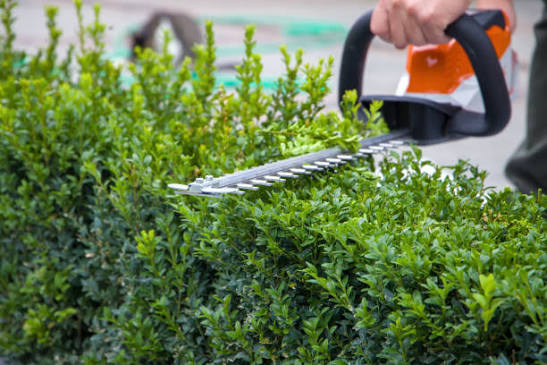
Shrubs never announce that they need trimming. There's no wilting, no browning, no dramatic moment — just quiet, continuous growth that crosses lines so gradually nobody notices the crossing. That's precisely how landscapes slide from maintained to overgrown: not through neglect exactly, but through the absence of any signal loud enough to trigger action.
So here are the signals — the clear, checkable signs that your shrubs are due for trimming now. Some are visible from the curb, some require a closer look, and a few are about what's happening inside the plants where nobody checks. Walk your property against this list, and you'll know exactly where your landscape stands — and why catching these signs early keeps trimming a light task instead of a rescue project.
The most visible sign on the property, and the one that sneaks up on everyone. Foundation shrubs — the hollies and boxwood under the front windows — grow toward the light, which means upward, past the sills, into the view. Because it happens an inch at a time, homeowners adjust without noticing: the rooms get gradually darker, the view gradually shorter, until one day a photo or a visitor makes it obvious.
Check it from inside: stand at each front window and note how much shrub you see. Anything climbing past the sill line is past due — and beyond the light and views, window-blocking growth is a security issue, concealing exactly the access points that should stay visible.
Walk your own front path like a guest and pay attention to your shoulders. Entry and walkway plantings encroach so gradually that residents unconsciously adjust their line of travel — the path is technically the same width, but the usable corridor shrinks season by season until visitors are brushing foliage on the way to the door. If anyone has to angle, duck, or step around a plant to reach your entry, the trimming is overdue — and the front door, the property's focal point, is being crowded instead of framed.
This one matters beyond appearances. Check the back side of every foundation shrub — the face nobody sees — for growth pressing against siding, brick, or trim. Vegetation in sustained contact with the structure holds a permanent pocket of moisture and shade against the material: the conditions that age paint, feed mildew, invite rot into wood elements, and give insects a covered route to the house. The maintained standard is a gap of open air between mature foliage and the wall — and if that gap has closed anywhere, the trim is a property-protection task now, not a cosmetic one. The same check applies to the AC unit: shrubs crowding the condenser choke the airflow the machine needs to run efficiently.
From the curb, read your landscape's lines. Sheared plants — the hedge, the globes, the formal shapes — telegraph their schedule status instantly: crisp geometry means recent care; a fuzz of new growth softening every surface means a quarter or more has passed; long ambitious shoots standing above the profile mean the shapes are actively dissolving. Natural-form plants show it differently — shagginess, wayward branches breaking the silhouette, the composed look going vague. Soft shapes are the earliest sign on this list and the cheapest to act on: a light trim now versus a re-establishment cut later.
Now the closer look. Part the outer foliage of your sheared shrubs and check the interior: years of surface shearing build a thin green shell over a progressively dead inside — brown twigs, bare stems, no interior leaves. That hollow structure is fragile (any cut past the shell exposes a permanent hole in species that can't regrow from bare wood), and it's a sign the plants need more than another surface pass — they need the selective interior work that lets light in and keeps inner growth alive.
The hedge version of the same problem shows at the bottom: bases going bare and see-through while the tops stay full. That's the geometry sign — a hedge trimmed straight-sided or top-heavy shades out its own lower growth, and every season it continues, the bare zone climbs. A hedge losing its legs needs its trimming corrected, not just repeated.
If your flowering shrubs — the azaleas, the hawthorns, the abelia — bloom less each year, or bloom in patches, the trimming schedule is usually the culprit: cuts landing at the wrong season remove the flower buds before they ever open, and indiscriminate shearing takes blooms and character together. Declining flowers on healthy plants is a timing sign — the landscape needs its trimming matched to each species' calendar, which is exactly what a proper quarterly program does by design.
The honest tiebreaker. North Texas growing conditions push most landscape shrubs into near-continuous growth from spring through fall — which is why the quarterly rhythm exists: four visits a year, each removing one season's modest growth, keeping every plant inside its shape and every clearance intact. If the last real trimming predates the current season, the signs above are already accumulating somewhere on the property, found or not.
Every sign on this list is cheap to answer now and expensive to answer later. Soft shapes trim back in minutes; dissolved ones need re-establishment. Closed clearances open with one pass; years-closed ones hide damage. Overgrown shrubs walk back down through careful staged work across seasons — the rescue project that the quarterly rhythm exists to make permanently unnecessary. The signs are the landscape asking early, while the asking is small. The quarterly schedule is what answers before it ever has to ask.

See the signs on your property? Kangaroo Outdoor Solutions provides quarterly shrub trimming — species-smart cuts, house clearances, and complete cleanup on a rhythm that keeps the signs from ever coming back. Build your quote today and get your landscape answered.