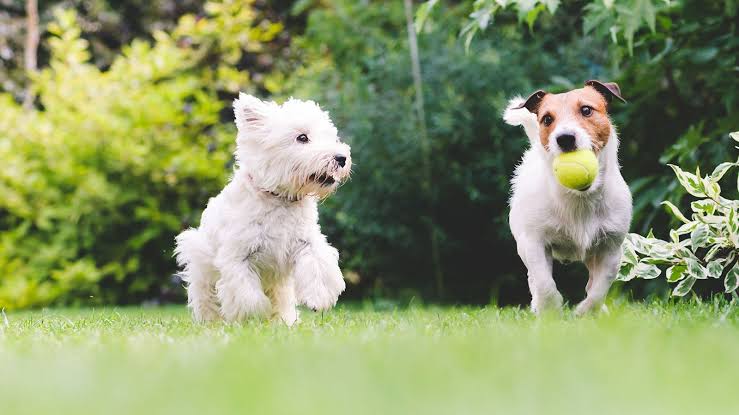
Somewhere between "the lawn" and "the dog," most homeowners assume they have to pick a favorite. The evidence seems damning: yellow-ringed dead spots multiplying across the turf, a dirt racetrack worn along the fence line, mysterious excavations in the flower bed, and a backyard that looks noticeably rougher than the dog-free front.
Here's the good news from the field: pets and great lawns coexist all over every neighborhood — not by accident, but because those homeowners understand the three specific ways dogs stress turf and run the specific counter-play for each. None of it requires choosing between your best friend and your yard. Here's the complete playbook.
Problem #1: Urine Spots — The Chemistry Lesson
Those round dead patches with the suspiciously dark-green, extra-lush ring around them? That ring is the diagnostic fingerprint of dog urine — and understanding why it forms explains the whole problem.
Dog urine is essentially a concentrated nitrogen solution — the same nutrient in lawn fertilizer, delivered at overdose strength in one spot. At the center of the deposit, the concentration burns the grass exactly like spilled fertilizer would; at the diluted edges, it fertilizes — producing the telltale dead-center, green-halo bullseye. (This is also why the myth about female dogs having "acidic urine" misses the point — the issue is nitrogen concentration and delivery style, not pH. Squatting deposits everything in one puddle; leg-lifting distributes smaller doses on vertical targets.)
The counter-plays, in order of effectiveness:
- Water is the antidote. Dilution neutralizes the overdose — a quick hose-down of fresh spots (within hours, ideally) spreads the nitrogen from burn-strength to feed-strength. Households that keep a watering can by the door genuinely stop new spots
- Train a zone. The single most effective long-term fix: designating a mulched or graveled corner as the bathroom area and training toward it. It concentrates the problem where there's no turf to burn
- Keep the lawn itself resilient. Well-watered, healthy turf on a proper irrigation schedule dilutes and recovers from deposits far better than drought-stressed grass, where every deposit lands at full strength on already-struggling blades
- Repair the casualties correctly. Established dead spots need the burned material raked out and a good soak to flush salts before recovery — with Bermuda's spreading runners refilling small spots on their own, while bigger repairs may need spot re-establishment
One caution flag: skip the "urine-neutralizing" supplements and home remedies that work by altering your dog's system — the lawn isn't worth your pet's health, and the mechanical fixes above genuinely work.
Problem #2: Wear Paths and Traffic Damage — The Physics Lesson
The dirt highway along the fence. The bald patch at the gate. The turn-radius skid zone by the porch steps. Dogs are creatures of route — they patrol the same lines daily, and repeated traffic on the same turf compacts the soil and wears the grass faster than it can recover. It's the same physics as a shortcut path worn across a park lawn, concentrated by an athlete who runs the route forty times a day.
The counter-plays:
- Fight the compaction directly. This is where core aeration earns its keep on pet properties — dog-trafficked lawns compact dramatically faster than pet-free ones, and the annual (or twice-yearly) opening of that soil is what keeps the traveled zones growable at all. If any lawn category should never skip aeration, it's the dog yard
- Grow the toughest turf you can. Among Texas grasses, Bermuda is the traffic champion — dense, aggressive, and self-repairing via runners — which is why it's the sports-field grass and the smart dog-yard grass. Keep it thick with proper feeding and mowing height, and it out-regrows moderate patrol traffic
- Concede the superhighway. Some routes — the fence line a dog patrols hourly — will never hold grass, and the professional move is to stop fighting: convert the established path to mulch, gravel, or stepping stones and let it be infrastructure. A deliberate path looks intentional; a losing turf battle looks like neglect
- Rest and rotate when repairing. Recovering areas need traffic breaks — temporary fencing during regrow, or seasonal rotation of the play zone, gives repairs a fighting chance
Problem #3: Digging, Beds, and the Chaos Category
The excavations, the trampled flower beds, the mulch redistributed across the patio — the miscellaneous chaos portfolio. The counter-plays here are more behavioral than horticultural, but the landscape can help:
- Digging is usually about something — heat (dogs dig cool beds in summer; a shaded rest spot or cooling mat removes the motive), boredom (exercise is lawn care), or prey (grub-hunting dogs and armadillo-style excavations can literally be a pest infestation alert — sudden digging plus browning turf says check for grubs)
- Defend the beds structurally. Low decorative fencing or dense border plantings channel dog routes around beds rather than through them, and chunky mulch is less fun to fling than fine shredded product
- Give the energy somewhere to go. The most maintained-looking dog yards usually feature a deliberate dog zone — the mulched run, the designated dig-friendly corner, the toy area — that absorbs the chaos so the showcase turf doesn't have to
The Safety Layer: Lawn Care Around Pets
The playbook runs both directions — the lawn program has to be safe for its co-owner:
- Respect re-entry timing on treatments. Professionally applied turf products come with clear guidance — typically keeping pets off treated areas until products have dried or watered in per label directions. A professional service tells you exactly when the lawn is pet-ready after each application; put it on the calendar and the whole issue is managed
- Communicate the pet situation. Good lawn crews want to know about dogs — for gate discipline (the non-negotiable habit of every professional visit), scheduling around the dog's outdoor time, and flagging anything they spot (like that digging-plus-grubs signal)
The Verdict: Both Is Possible
The dog-friendly great lawn isn't a myth — it's a system: dilution and a trained zone against the chemistry, aeration and tough turf against the physics, smart zoning against the chaos, and a maintenance program run with pet-aware timing. Your dog gets the yard. You get the lawn. Nobody has to pick a favorite.