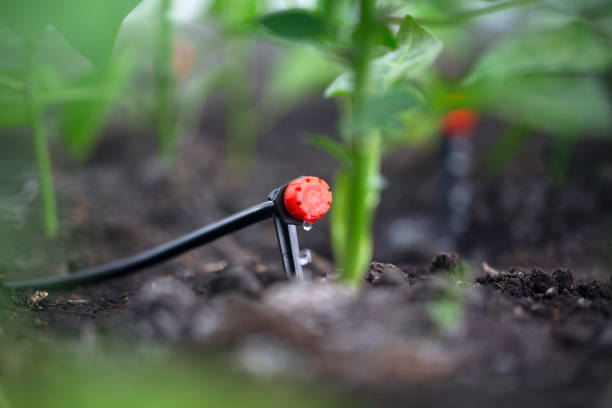
There's a quiet divide running through the flower beds of every neighborhood. On one side: beds watered by spray heads — the same misting fans that water lawns, broadcasting water over foliage, mulch, and open soil alike. On the other: beds watered by drip — tubing snaked invisibly under the mulch, releasing water slowly and directly at the root zones of the plants themselves. The plants know the difference. The water bill knows the difference. Even the weeds know the difference.
Drip irrigation is, by a wide margin, the best watering technology for landscape beds — and also the least understood, most neglected zone type on residential systems. Here's the complete guide: why drip beats spray for beds so decisively, how the systems actually work, the maintenance realities nobody mentions at installation, and how to keep the best watering your landscape gets actually working.
Start with the design logic. Turf is a continuous surface crop — thousands of plants per square foot, roots knitted across the whole area — so broadcast watering (rotors, sprays) matches it: cover everything, because everything is lawn.
Beds are the opposite: discrete plants with defined root zones, separated by open mulch. A bed might be 80% mulch and 20% actual plant root zone — and spray irrigation waters all of it identically. That mismatch drives every bed-watering problem:
Drip inverts all of it: water delivered slowly, at soil level, only at the root zones — dry foliage, dry weed ground, near-zero evaporation, and every gallon working.
The anatomy, for homeowners who've never seen theirs:
The zone starts like any other — a valve on your controller — but immediately gets drip-specific hardware: a pressure regulator (drip runs at much lower pressure than spray; unregulated pressure blows fittings) and a filter (the fine emitter passages clog on sediment that spray nozzles shrug off — the filter is the system's liver, and its existence is why drip maintenance has a step spray doesn't).
Then the tubing network: supply tubing running the bed, with water released through emitters — either built into the tubing at intervals (inline drip, the modern standard for beds) or punched in individually at each plant (point-source, common on older systems and for containers/trees). Emitters release water at slow, measured rates — gallons per hour, not per minute — which is the whole magic: water arrives at the pace clay soil can absorb, soaking deep at the root zone with zero runoff.
The scheduling logic follows: drip zones run long and infrequent — sessions measured in tens of minutes to hours (delivering deep soakings at those slow rates), a couple of times weekly in season, on their own program separate from turf zones. The most common drip scheduling error is running bed zones on lawn-zone timing: ten minutes of drip delivers almost nothing.
Line up what drip delivers for beds:
Now the part the installation brochure skipped: drip's greatest strength — invisibility — is its maintenance liability. A broken spray head announces itself with a geyser; a failed drip emitter announces itself with a dead shrub, weeks later. The failure catalog:
And the maintenance answer is exactly what the failure modes imply: deliberate, scheduled inspection — running the drip zones while someone actually looks: lifting mulch to verify emitters emitting along the runs, checking the plants' report (any stretch declining?), cleaning the filter, walking for soggy spots and dry runs, and adjusting the schedule with the seasons. It's not hard work; it's work that never happens by accident, because nothing about a drip zone is visible from the porch. This is precisely why drip belongs inside a professional irrigation maintenance rhythm — the zone type that most rewards scheduled eyes is the one type that never gets casual ones.
For the beds still on spray: conversion is one of the highest-value irrigation upgrades available — typically retrofitting the existing zone (the valve and piping stay; the spray heads give way to drip supply and tubing through the beds) with the regulator and filter added. Candidates in priority order: beds with disease-prone plantings (get that foliage dry), beds with chronic weed pressure, high-visibility beds where overspray stains and mulch-blasting annoy, and any bed where valuable plantings deserve the best delivery. Pair the conversion with a mulch refresh — tubing tucked under fresh proper-depth mulch — and the bed gets its full upgrade in one visit.
The through-line of the whole subject: drip is what watering looks like when it's designed around the plants instead of around the ground — and like everything designed well, it repays attention and punishes abandonment. Give the invisible zone its scheduled eyes, and your beds get the best watering on the property for years. Ignore it, and you'll learn about every failure from the plants — always the most expensive messengers.

Whether your drip needs its first real inspection or your spray beds deserve the conversion, Kangaroo Outdoor Solutions handles it — complete irrigation maintenance and repairs across every zone type, turf to drip. Build your quote today and give your beds the watering they were designed for.