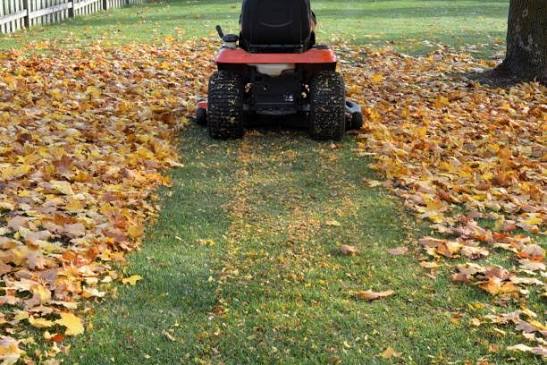
Fall leaf removal has a reputation problem: most homeowners file it under tidiness — a cosmetic chore, done for the neighbors, skippable in a busy season. The lawn underneath those leaves would file it differently. For turf, leaf removal is a health service with a deadline, and the lawns that skip it pay the bill months later, in spring, when the damage finally shows.
Here's the full picture of fall leaf removal: what a leaf layer actually does to the grass beneath it, why timing matters as much as thoroughness, what a complete removal includes, and how the right plan depends on the trees over your particular yard.
A few scattered leaves are harmless — the lawn shrugs them off, and light coverage can even be mulch-mowed back into the turf as free nutrition. The problem is the layer: when leaves accumulate faster than they're cleared, they mat into a continuous blanket, and that blanket goes to work against the grass in four ways at once.
It blocks the light. Grass is a plant, and even in fall — especially in fall — it's photosynthesizing, rebuilding from summer, and banking energy reserves for next spring's green-up. A matted leaf layer shades the turf almost completely through the exact weeks it needs the light most. Smothered zones enter winter weak and wake up in spring thin, patchy, or dead.
It traps moisture. Fall rains soak into the leaf mat and stay there, holding wetness against the grass blades for days at a stretch. That's the precise recipe for brown patch and the other fungal diseases of the cool, damp season — and St. Augustine lawns, the most fungus-prone of the Texas grasses, suffer it worst.
It shelters pests. A deep, damp leaf layer is winter habitat for insects and rodents — often piled right against the foundation, the fence lines, and the beds.
And it smothers more than turf. Leaves collect in flowerbeds around shrub crowns, trapping the moisture that rots stems and hiding pests through winter; they dam swales, curb lines, and drains right before the winter storm season; and they bury the mulch layer that's supposed to be working.
The key variable in all of it is time on the ground. The same leaves cleared within a couple of weeks do essentially no harm; left matted for six weeks of wet fall weather, they do all of the above. Leaf removal isn't about how many leaves fall — it's about how long they sit.
A real leaf removal covers the whole property, not just the open lawn — because the lawn is only one of the places leaves do damage.
The turf gets the full clearing, including the matted layers in the shade zones and the wind-piled drifts along the edges — lifted, not skimmed, because the compressed wet layers doing the actual harm are exactly what a quick pass leaves behind. The beds get blown clear around every plant base, leaving crowns breathing and mulch visible. The corners, fence lines, and structure edges get dug out — the accumulation zones where drifts sit deepest and longest. The drainage paths get opened before winter rains test them. And the hard surfaces get blown spotless as the finish.
Then the defining feature: haul-off. Everything leaves the property — no bag mountain at the curb, no pile behind the fence. A service that relocates the leaves instead of removing them has done half the job at full inconvenience.
Because time on the ground is the damage variable, the right leaf removal plan depends entirely on your trees.
Properties with lighter canopy — a few trees, or leaves mostly drifting in from neighbors — are well served by one thorough removal, timed after the bulk of the drop, typically late November into December in North Texas. The accumulation before that visit never gets deep enough to mat and smother, so a single complete cleanup captures the season safely.
Properties under real canopy — mature oaks, pecans, elms shedding by the ton — cannot wait for the drop to finish. On those lawns, the first half of the season's leaves would sit matting for six to ten weeks before a late cleanup ever arrived, doing their full damage before removal. The answer is recurring removal through the drop — the three monthly visits model — clearing each wave before it ages into harm, so no layer on the property ever sits more than a few weeks.
And one North Texas footnote worth knowing: if your canopy includes live oaks, the season isn't over in December. Live oaks hold their leaves through winter and drop them in late winter and early spring — a second full leaf event, landing right on your greening lawn — and a complete leaf plan accounts for it.
The real report card for fall leaf removal comes at spring green-up. The cleared lawn wakes uniform — no dead zones under where the piles sat, no fungus scars from the wet-mat weeks, the fall feeding's banked reserves intact because the banking happened in daylight. The skipped lawn greens up annotated: thin patches mapping last fall's accumulation, bare spots where the deepest mats sat, and a weed invasion already claiming the openings.
Same trees, same winter — the difference was whether the leaves sat. That's fall leaf removal, honestly stated: not a tidiness chore, but the last protective step of the lawn year, and one of the cheapest insurance policies a spring lawn can have.

Protect the lawn you built all year. Kangaroo Outdoor Solutions provides complete fall leaf removal — one-time cleanups or three monthly visits, whole property covered, haul-off always included. Build your quote today and give your lawn a clean winter.