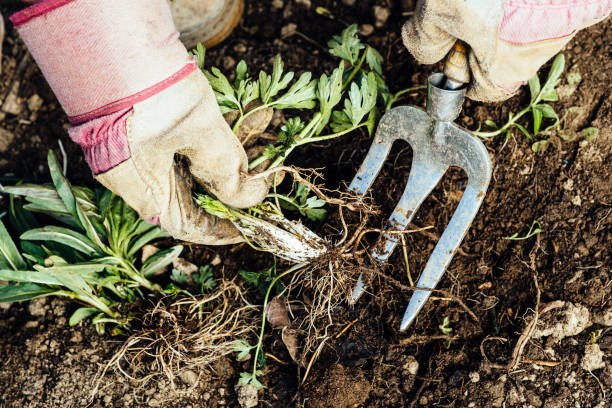
You spent good money on your landscape beds. The shrubs, the seasonal color, the mulch, the clean edges — it all looked perfect when it was installed. Then the weeds showed up.
First a few sprigs of nutsedge poking through the mulch. Then spurge creeping along the edges. Then, seemingly overnight, crabgrass and dandelions staging a full takeover. If this sounds familiar, you're not alone. Flowerbed weed control is one of the most frustrating, most repetitive chores in all of North Texas homeownership — and it's exactly why monthly professional bed maintenance has become one of the most requested landscape services in the Weatherford area.
In this guide, we'll break down why weeds keep winning in your flower beds, why one-time cleanups never last, and how monthly flowerbed weed control keeps your beds clean year-round with none of the weekend battles.
Here's the frustrating irony: everything that makes a flower bed great for your plants also makes it great for weeds.
Bed soil is looser and richer than compacted lawn soil. Weed seeds germinate in it effortlessly.
Your drip lines and sprinklers water the weeds just as faithfully as they water your shrubs and flowers.
Unlike a dense lawn where turf crowds out invaders, beds have open soil between plants — prime real estate for weeds to claim.
Weed seeds arrive on the wind, in bird droppings, on pets, and even in bagged soil and mulch. North Texas weeds like crabgrass, dallisgrass, spurge, henbit, chickweed, and the notoriously stubborn nutsedge produce thousands of seeds per plant. Miss one weed and let it go to seed, and you've planted next month's invasion.
Most homeowners fight flowerbed weeds the same way: wait until the beds look bad, then spend a Saturday pulling everything. It feels productive — but here's why the weeds always come back:
Every square foot of bed soil contains dormant weed seeds — sometimes thousands of them — that can remain viable for years. Pulling visible weeds does nothing about the seeds waiting underneath. Within two to three weeks, a new generation germinates and the cycle repeats.
Perennial weeds like nutsedge and dallisgrass regrow from any root fragment left in the soil. Hand-pulling often snaps the top off while the root system survives — and comes back stronger.
Effective weed control depends on hitting weeds at the right stage: pre-emergent products before seeds germinate, post-emergent treatments while weeds are young and vulnerable. Weeds don't wait for your free Saturday, and by the time beds "look bad enough" to act, the weeds are mature, seeding, and much harder to kill.
Monthly flowerbed weed control flips the strategy from reaction to prevention. Instead of letting weeds establish and then fighting them, a professional visits your beds every month to keep them from ever taking hold. A complete monthly program typically includes:
Visible weeds are removed properly — roots and all — before they mature and go to seed. Because visits happen monthly, weeds never get big, which means removal is faster, cleaner, and more complete.
Pre-emergent applications create a barrier in the soil that stops weed seeds from germinating in the first place, while carefully applied post-emergent treatments knock out breakthrough weeds without harming your shrubs, perennials, or seasonal color. Applying these products around ornamental plants takes knowledge and precision — one reason bed weed control is best left to trained hands.
Every monthly visit doubles as a health check for your landscape: spotting pest activity, drainage issues, plant stress, and thinning mulch before they become expensive problems.
The single most important factor in flowerbed weed control isn't the product used — it's the consistency.
Think about the math of weed reproduction. A single spurge plant can produce several thousand seeds in its short life. If your beds are only cleaned every three or four months, every weed in them has time to mature and seed before removal. You're not reducing the weed population — you're farming it.
Monthly visits break the reproduction cycle. Weeds are removed before they seed, month after month. The soil's seed bank gradually depletes instead of constantly replenishing. Over the course of a year, homeowners on monthly programs consistently notice the same thing: the beds stay clean with less and less effort, because the weed pressure itself is shrinking.
There's also the aesthetic reality: with monthly flowerbed weed control, your beds simply never reach the "overgrown" stage. Your landscape looks maintained 52 weeks a year — not just for a week or two after each big cleanup.
Mulch is your flower beds' first line of defense, and it works hand-in-hand with monthly weed control. A proper 2–3 inch mulch layer:
But mulch thins out over time — it decomposes, washes, and scatters. As it thins, sunlight reaches the soil and weeds surge. That's why fresh spring mulch installation combined with monthly bed maintenance is such an effective one-two punch: the mulch suppresses the bulk of weed germination, and monthly visits handle everything that gets through.
Weedy flower beds cost more than curb appeal:
There will always be another weed. That's just North Texas. The question is whether you'll spend your weekends fighting them — or whether your beds will simply stay clean, month after month, while someone else handles the battle.
Monthly flowerbed weed control keeps your landscape beds healthy, your curb appeal sharp, and your Saturdays free. Paired with quarterly shrub trimming and fresh mulch, it's the difference between a landscape that looks maintained once in a while and one that looks maintained always.

Kangaroo Outdoor Solutions provides monthly flowerbed weed control for homes across Weatherford, Hudson Oaks, Aledo, and surrounding North Texas communities — consistent visits, clean beds, zero weekend weed battles. Build your quote today and let our team keep your beds beautiful year-round.