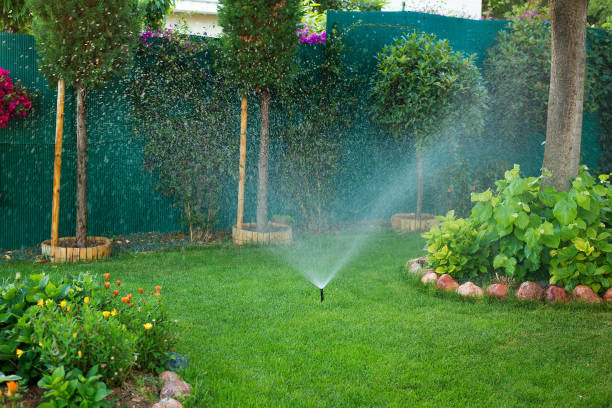
Every North Texas summer runs the same stress test. For three to four months, the sky stops helping, the temperatures camp in the upper 90s and beyond, and every lawn in the region becomes completely dependent on one machine: the irrigation system. Through the mild months, sprinkler problems are cosmetic — a dry patch here, a wasted gallon there. In July, the same problems kill turf in days, because there's no rain coming to cover the gap and no margin left in the heat.
That's why the weeks before summer are the most important weeks on the irrigation calendar. A system checked, repaired, and tuned in late spring goes into the heat ready for the only season that truly tests it. Here's the complete summer-readiness checklist — what to verify, what to fix, and how to set the schedule before the triple digits arrive.
Summer readiness begins with the one thing most systems never get: witnessed operation. Run every zone manually, in daylight, and watch each one from start to finish.
You're confirming the basics zone by zone: every head rises fully, sprays a complete pattern, and retracts when done. You're looking for the failures that summer will convert into dead turf — the broken head gushing, the sputtering nozzle spraying a gap-toothed pattern, the tilted head watering the fence, the sunken head spraying into the grass blades around it. And you're checking the ground itself: any spot that's soggy before its zone runs points to a leak or a weeping valve that's been operating on its own schedule.
Every problem found in this walk is cheap right now. The same problem discovered in July — usually via a brown patch that's already dead — costs turf on top of the repair. The whole logic of summer prep is moving those discoveries from the expensive season to the free one.
A system can have every head working and still leave the lawn exposed, because summer punishes something milder seasons forgive: coverage gaps.
Sprinkler layouts are designed for head-to-head coverage — each head's spray reaching the next head — so every area gets overlapping delivery. Over the years, that design erodes: heads get knocked off alignment, shrubs grow into spray paths, nozzles wear, and pressure changes shorten throw distances. In spring, the resulting gaps are invisible, because rain fills them. In summer, rain stops, and every gap becomes a brown shape in the lawn — the mysterious dry crescents and strips that appear each July and get misdiagnosed as disease or grubs.
The pre-summer check: as each zone runs, look at where water actually lands versus where turf actually grows. Edges and corners deserve special attention — they're where coverage fails first. Fixing gaps now — realigning heads, adjusting arcs, clearing blocked spray paths — is the single highest-value item on the whole checklist, because gaps are the summer killer nobody sees coming.
The controller running spring settings into summer is one of the most common — and most damaging — seasonal mistakes. Summer demand is dramatically higher, and the schedule has to rise to meet it, the right way.
The right way is deeper, not more often. The deep and infrequent principle matters most in summer: longer sessions that push moisture deep, a few times a week, building the deep-rooted turf that survives heat — versus the daily light sprinkles that keep roots shallow and the lawn permanently fragile. On our clay soil, pair the deeper sessions with cycle and soak: each watering split into two or three shorter cycles spaced an hour apart, so the slow-absorbing ground drinks everything instead of shedding the second half to the curb.
Keep the start times early — watering that finishes by mid-morning soaks in with minimal evaporation and lets the grass dry with the sunrise, closing the fungus window that evening watering opens. Check every program slot for forgotten start times that will double-water once the season peaks. And confirm the rain sensor actually works, so the system pauses when summer storms do arrive instead of watering through them.
One more summer-specific note: know your local watering restrictions before they tighten. Many area cities move to assigned days or limited windows in peak season — and a system tuned for efficiency delivers its full restricted allowance to the roots, while an untuned one wastes a share of a budget that can't be supplemented.
Two parts of the system deserve targeted attention before the heat.
The valves get tested in both directions — zones that hesitate to start and zones slow to stop are valves telling you they're wearing, and a valve that fails open or closed in July is a crisis, not a quirk. The drip zones — the bed lines under the mulch — get their deliberate inspection: emitters checked along the runs, the filter cleaned, any chewed or cut tubing repaired. Drip failures are invisible by design, and summer is when the shrubs they serve have zero tolerance for a silent dry line.
Do the work above in late spring and summer becomes what it should be: uneventful. The zones cover, the schedule fits the heat, the failures were already found and fixed at repair prices instead of resod prices. The lawns that come through August green aren't lucky — they're supplied, by systems somebody made ready. The ones that come through brown usually trace their damage to a problem that was visible in May, running unwitnessed at 5 a.m., waiting for July to present the bill.
The professional version of all of this is a pre-summer irrigation checkup — every zone run under trained eyes, coverage verified, repairs completed in the same visit, and the controller rebuilt for the season. One appointment, and the machine your entire summer lawn depends on is actually ready for the job.

Get summer-ready before the heat decides for you. Kangaroo Outdoor Solutions provides complete irrigation maintenance and repairs — pre-summer inspections, coverage tuning, and same-visit fixes across every zone. Build your quote today and go into the hot months covered.