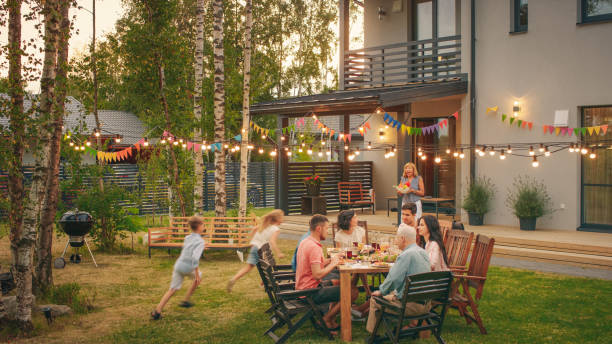
Somewhere on your calendar is a date with a yard attached: the graduation party, the family reunion, the backyard birthday, the holiday hosting rotation landing on your house this year — maybe even the small wedding. And between now and that date stands the honest current state of the lawn, the beds, and the shrubs, all of which will be photographed, walked on, and silently evaluated by everyone you know.
Here's the thing about event-ready yards: they can't be produced the day before. Grass greens on a biology schedule, plants recover from trimming on their own time, and the difference between "we cleaned up" and "this yard is beautiful" is built across weeks. But with the right countdown, a very ordinary yard becomes a genuinely impressive venue — and the plan practically runs itself. Here's the complete timeline, from six weeks out to the morning of.
Six Weeks Out: Start the Engine
Six weeks is the magic window — enough time for the slow-moving improvements that make everything else look good:
- Lock in the mowing rhythm now. The single biggest visual factor at your event will be the lawn, and lawns reward consistency over heroics: six weeks of weekly proper-height mowing produces the dense, even, healthy turf that no day-before cut can fake. If you're hiring maintenance, this is the week to start — the event is the deadline, but the lawn needs the runway
- Feed the lawn (if the season's right). A seasonal-appropriate feeding at six weeks out is timed for the color payoff to peak in the event window — deep green takes weeks to build, which is exactly why it can't be bought later
- Fix the irrigation first, not last. Run every zone and watch: the broken head browning one corner, the dry crescent by the patio — these need weeks of corrected watering to green back up. Irrigation repairs at six weeks show at the event; repairs at one week are just repairs
- Address the eyesores with lead time. The dead patch that needs a sod repair, the bare spot, the drainage puddle where guests will stand — the fixes that need establishment time all go on this week's list
- Book everything. If professionals are involved — maintenance, cleanup, mulch, trimming — six weeks out is when the schedule gets built backward from your date. (Spring and holiday seasons book up; the event yard that waits until two weeks out takes whatever slots remain)
Four Weeks Out: The Structural Pass
- Shrub trimming happens here — not later. This is the timing secret most hosts miss: shrubs trimmed four-ish weeks out get their brief "just cut" stiffness out of the way and soften into natural-looking, freshly-grown perfection right on schedule. Trimmed the week of the event, they look like they got a haircut in the car. Four weeks also leaves margin for anything heavier — the overgrown corner, the hedge that needs real shaping, the walkway plants grabbing at guests
- The beds get their reclamation. Full weed removal, edges re-cut, debris cleared — the deep-clean version, so the remaining weeks are maintenance rather than rescue
- Walk the property as a guest. Literally: enter like an arriving visitor, walk the route to the backyard, sit where they'll sit. You'll see what you've stopped seeing — the sidewalk crack sprouting grass, the gate that shrieks, the corner where the hose lives in a pile. List it all; the next four weeks absorb the list
Two Weeks Out: The Transformation Layer
- Fresh mulch goes in. The highest visual-impact-per-dollar move in the entire countdown, timed deliberately: two weeks out, the mulch is fresh enough to still look dark and new at the event, settled enough to look established rather than just-dumped. Beds framed in fresh mulch against a maintained lawn is 80% of "wow, the yard looks incredible"
- Seasonal color, if you're adding it. Flowering annuals at entry points, along the walk, by the patio — planted two weeks out, they've rooted in and filled slightly by the date. A modest color budget placed where guests actually look (the entrance, the tables, the photo backdrops) outperforms a big one scattered
- Edges get restored to crisp. The full edging pass — hard surfaces and bed lines — with two weeks of easy maintenance to hold it
- Confirm the schedule. The final mow should land one to two days before the event — close enough to be fresh, far enough that the lawn stands back up and any clipping evidence is gone. Confirm it now
The Final Week: Polish Mode
- The lawn's last cut on its scheduled day — proper height (resist the scalp-it-shorter-so-it-lasts urge; tall and dense photographs better and handles foot traffic better), crisp edges, everything blown clean
- The detail sweep: hard surfaces washed or blown spotless, cobwebs off the eaves by the patio, furniture wiped and arranged, string lights tested, the hose coiled somewhere invisible
- Water strategically. Deep-water the lawn two days before, not the night before — you want turf hydrated and resilient for foot traffic, and ground that's firm underfoot, not squishy. (Day-of irrigation gets turned off: nobody wants the 6 a.m. zone run soaking the chairs — or a surprise afternoon cycle during the toast. Check the controller)
- The mosquito prep, three-to-four days out: the container-flip patrol, the standing-water check, and fans staged for the patio — the evening event's quiet MVP
Day Of: The Fifteen-Minute Walk
Morning of, one last pass: blow or sweep the surfaces, deadhead anything browning in the color beds, straighten the mulch edge where the dog investigated, and do the guest-walk one final time. Then stop. The yard is done — six weeks of compounding, finished on time, and the only remaining job is pretending it always looks like this.
The Honest Postscript
Two closing notes. First: the day-before panic version of this project — one heroic weekend of cutting, cramming, and hoping — produces a yard that looks worked on; the countdown version produces one that looks cared for. The difference is visible in every photo. Second: hosts consistently discover the same thing after the event — that the six weeks of rhythm that produced the party yard is just... maintenance, and the yard could look like that every week. Which is its own kind of revelation, and a much better souvenir than the leftover ice.