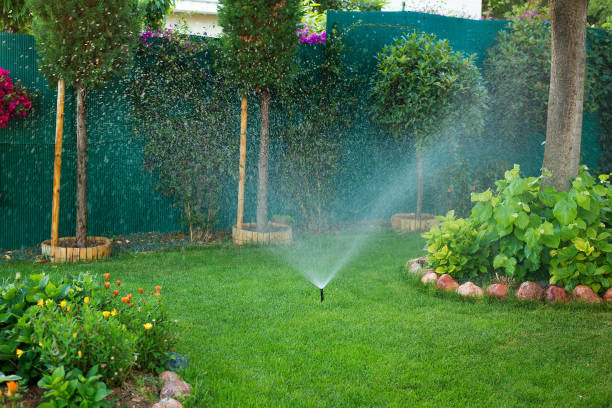
Every summer, North Texas water bills tell the same story in the same direction: up. Irrigation is the dominant driver of residential water use through the hot months — routinely more than half of a home's summer consumption — and homeowners mostly treat the resulting bill as weather, something that happens to them. Water restrictions tighten, rates climb through tiered pricing, and the sprinkler system keeps running its pre-dawn shifts, unexamined.
Here's the reframe worth the read: for most homes, the summer water bill isn't a weather event — it's a maintenance status report. A meaningful share of what irrigation systems pump every season is pure waste, produced by a short list of fixable conditions, and irrigation maintenance is the rare service that directly and measurably pays for itself on a utility bill. Here's the math — where the waste actually hides, what fixing each source is worth, and why the greenest lawns and the sanest bills belong to the same houses.
Start with the biggest line item, because it dwarfs everything else:
The maintenance connection is direct: these failures are exactly what a zone-by-zone inspection exists to find, and they hide specifically because nobody watches systems run at 5 a.m. Every leak found in a routine inspection converts immediately into bill reduction — the most literal payback in all of lawn care. And the cruel math of skipping the inspection: the repair that would have cost little gets funded instead, month after month, through the meter.
The second category is subtler — the system runs "correctly" and still wastes a steady percentage of everything it pumps:
Each item is small per cycle; multiplied across every zone, every run, all season, they add up to the untuned system's signature: a bill inflated by delivery losses the lawn never benefits from. A maintenance visit's realignments, nozzle work, and schedule corrections claw that percentage back — permanently, until the next drift.
The third source lives in the controller — the settings running the whole operation:
Seasonal reprogramming, program audits, sensor checks — the controller half of an irrigation maintenance visit — converts directly into consumption reduction, with the pleasant side effect of a healthier lawn (the fungus-feeding, root-weakening overwatering patterns are the same ones inflating the bill).
One more layer to the math: everything above matters most exactly when water matters most. When restrictions arrive — assigned days, limited windows — the tuned system delivers its entire restricted allowance to the root zone, while the untuned one wastes its share of a budget that now can't be supplemented. The maintenance that lowers the bill in a normal summer is the same maintenance that keeps the lawn alive in a restricted one. Efficiency isn't just savings; it's resilience, pre-purchased.
The honest homework: pull up last summer's water bills, note the irrigation-season jump over winter baseline, and consider that untuned residential systems routinely waste a meaningful fraction of that seasonal increase across the leak, delivery, and scheduling categories above. Against that number, routine irrigation maintenance — the seasonal inspections, the repairs done in their cheap phase, the controller kept honest — isn't a landscaping luxury competing with the budget. It's a utility-bill intervention that happens to also produce a greener lawn. The houses with the best turf and the calmest summer bills aren't lucky twice. They're maintained once.

Stop paying for water your lawn never gets. Kangaroo Outdoor Solutions provides complete irrigation maintenance and repairs — leak detection, zone tuning, and controller programming that show up on the bill. Build your quote today and make this the cheaper, greener summer.