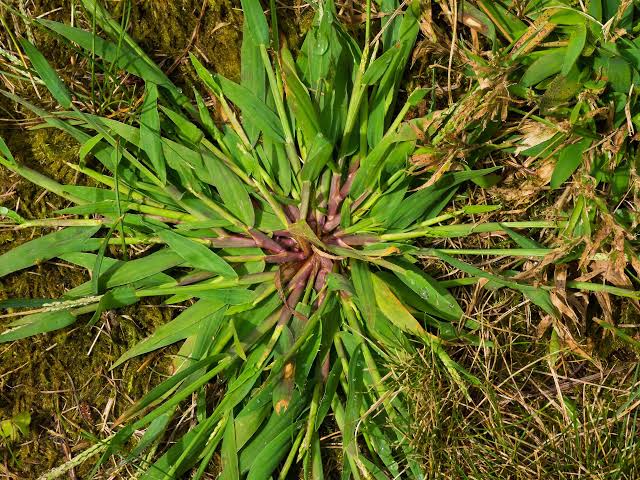
Every summer, it shows up like an uninvited guest: coarse, sprawling, lime-green clumps spreading across an otherwise decent lawn. Crabgrass doesn't just look bad — it grows faster than your turf, steals its water and nutrients, and drops thousands of seeds that guarantee next year's invasion will be worse than this year's.
Here's the frustrating truth most homeowners learn the hard way: by the time you can see crabgrass, you've already lost the easiest battle against it. The real fight happens months earlier, before a single seed germinates.
The good news? Crabgrass is completely beatable with the right strategy. In this guide, we'll break down how to get rid of crabgrass — the timing, the treatments, and the turf-strengthening tactics that make sure it doesn't come back.
Crabgrass is an annual weed — it lives one season, dies at the first frost, and returns the next year entirely from seed. That life cycle is its weakness and its superpower:
Crabgrass doesn't invade healthy, dense lawns easily. It exploits thin turf, bare spots, scalped edges, and compacted soil — anywhere sunlight reaches open ground. Remember that, because it's the key to long-term victory.
If you only do one thing against crabgrass, make it this: apply a pre-emergent herbicide before the seeds germinate.
Pre-emergent products create an invisible barrier in the top layer of soil that stops germinating seeds from ever developing into plants. It's the difference between locking the door and chasing an intruder around your house.
Pre-emergent must be down before soil temperatures trigger germination — in warm-climate lawns, that generally means late winter. Apply too late and the seeds have already sprouted; the barrier does nothing against existing plants. Many professional turf programs also apply a second round to extend protection through the long germination window, plus a fall pre-emergent to block winter weeds.
The right window shifts every year with the weather, and it's based on soil temperature, not the calendar. This is exactly why lawns on professional turf control programs stay cleaner than DIY lawns — the applications are timed by people tracking local conditions, not by whenever the weekend is free.
Already got crabgrass? Pre-emergent won't help this year's plants. Now you need post-emergent treatment — and precision matters.
Herbicides win battles. Dense turf wins the war. Crabgrass needs sunlight hitting bare soil to establish — so the ultimate crabgrass control is a lawn so thick there's nowhere for it to grow.
Taller grass shades the soil surface, keeping it cooler and darker — conditions crabgrass seeds hate. Scalped lawns and short-cut edges along driveways and sidewalks are crabgrass nurseries. Raise the deck and keep it there.
Scheduled fertilization keeps your lawn thick and aggressive, closing the gaps crabgrass exploits. An unfed lawn thins; a thin lawn invites weeds.
Deep, infrequent watering grows deep turf roots. Shallow daily sprinkles favor shallow-rooted weeds — crabgrass among them.
Every bare patch is a crabgrass invitation. Aeration relieves the soil compaction that thins turf, and repairing dead spots quickly denies weeds their foothold.
That last point deserves emphasis: crabgrass control compounds. One well-executed year cuts the invasion dramatically. Two or three consecutive years of proper pre-emergent timing and thick turf can take a lawn from crabgrass-riddled to essentially crabgrass-free.
Crabgrass control isn't hard because the concepts are complicated — it's hard because execution and timing have zero forgiveness. Miss the pre-emergent window by two weeks, use the wrong post-emergent for your grass type, or let one season slip, and you're starting over.
A professional turf control program handles the entire calendar: soil-temperature-timed pre-emergents, safe and effective post-emergent treatments matched to your turf, and the fertilization schedule that keeps your lawn thick enough to defend itself. Combined with proper weekly mowing at the right height, it's a system crabgrass simply can't beat.

Tired of fighting crabgrass every summer? Kangaroo Outdoor Solutions' Turf Control Program combines perfectly timed pre-emergent applications, targeted weed treatments, and lawn-strengthening fertilization to get rid of crabgrass — and keep it gone. Build your quote today and let's take your lawn back.