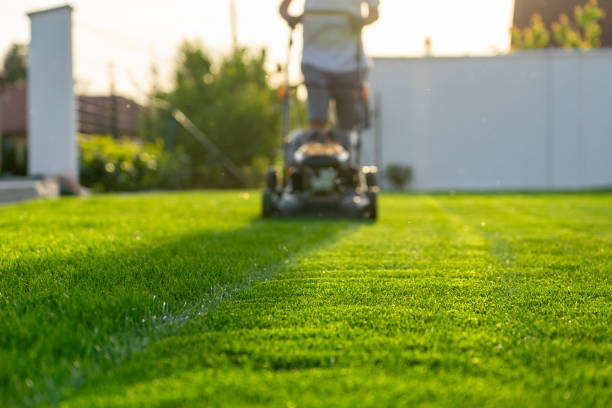
Every struggling lawn has a story. Maybe it came with the house you just bought. Maybe a brutal summer got ahead of you. Maybe two years of "I'll deal with it next season" finally compounded into something that looks less like a lawn and more like a weed exhibit with occasional grass. However it happened, you're now standing in the yard asking the renovation question: can this be saved — and where do I even start?
Here's the encouraging truth up front: most rough lawns are far more recoverable than they look. Warm-season grasses like Bermuda are aggressive spreaders with underground survival systems, and a lawn that appears 60% gone often has enough living root structure to rebuild itself — if the conditions that killed it get corrected and the recovery gets managed in the right order. The order is everything. Renovations fail when homeowners skip the diagnosis and jump straight to throwing products and effort at symptoms.
This is the complete lawn renovation playbook: how to assess what you actually have, the fix-it sequence that works, the honest recovery timeline, and how to know when renovation should give way to starting over.
Before spending a dollar, spend an hour learning what you're working with. Three questions decide the entire renovation strategy:
Walk the lawn and look past the weeds and brown. Warm-season turf hides its survivors: dormant or stressed Bermuda looks dead while holding live crowns and rhizomes underground. Run the tug test across representative spots — grass that resists pulling has living roots; turf that lifts freely with rotted bases is genuinely gone. Then estimate coverage honestly: is living grass (however sad) present across most of the lawn, patchy in islands, or essentially absent?
The threshold that matters: if roughly half or more of the lawn has living turf — even thin, weedy, struggling turf — renovation wins. Bermuda's spreading habit means surviving grass recolonizes bare ground once conditions improve. Below that, you're weighing renovation against re-establishment (sod or seed), and the math starts favoring the reset.
This is the step everyone skips and the reason most DIY renovations fail: a lawn declines for reasons, and rebuilding grass into unchanged conditions just re-runs the decline in slow motion. The usual suspects:
Most rough lawns have two or three of these stacked. List yours — the renovation plan is literally the fix list in order.
Renovation runs on the growing calendar. Warm-season grass rebuilds when it's actively growing — late spring through summer is the recovery engine — while fall renovation work shifts toward setup (aeration, feeding, weed prevention) that pays off at spring green-up. Starting a renovation in November doesn't fail; it just front-loads the correction work and schedules the visible recovery for April.
With the assessment done, the work follows a deliberate order — each step enabling the next:
Nothing else matters until the irrigation delivers. Repair the broken heads, fix the dead zones, realign the coverage, and reprogram the controller to the deep-and-infrequent schedule that builds roots. Recovery is a growth project, and growth runs on water — a renovation on a broken system is fertilizer sprinkled on a dry sponge.
A neglected lawn's weeds aren't cosmetic — they're occupying the space and resources your recovering grass needs. Begin the takedown: post-emergent treatment matched to the weed types and safe for your grass type (the product-selection step where DIY renovations burn their surviving turf), with the stubborn perennials (dallisgrass, nutsedge) getting their multi-round treatments started. And get the pre-emergent calendar running at the next window — the renovation year is also year one of shrinking a badly stocked seed bank.
Expect this front to be gradual: heavy weed pressure recedes over a season of consistent treatment, not a weekend. What matters is that every month, the weeds hold less ground and the grass holds more.
Compacted clay is renovation's silent saboteur — you can water and feed perfectly and watch it all shed off soil the roots can't penetrate. Core aeration, timed to the growing season, is the unlock: thousands of open channels for the water from Step 1 and the feeding from Step 4, plus the physical room the recovering roots need. For genuinely hammered lawns, plan on aeration both this season and next — one pass starts the correction; the rhythm completes it.
Now — with water flowing, weeds receding, and soil open — fertilization finally has its platform. A feeding program matched to the season fuels the spread: Bermuda fills bare ground through runners and rhizomes, and a fed, watered, aerated lawn in summer can close surprising amounts of open space. This is also where mowing discipline joins: weekly cuts at proper height drive lateral spreading (frequent light mowing is literally a signal to warm-season grass to thicken), while every scalping event sets the project back.
After a season of recovery, honest gaps remain: the true kill zones (grub damage, the deepest compaction scars, the spots that were bare too long). These get direct re-establishment — sod patches for instant coverage in visible areas, plugs or managed spread for patient budgets — placed into the corrected conditions, which is why this step comes last. Sod laid into the old broken conditions is just expensive future thatch.
And the shade zones from the assessment? They exit the turf project entirely — converted to mulched beds or shade planting, which will look deliberately better than struggling grass ever did.
Set expectations like a professional would:
The honest decision line: renovation wins when living turf covers roughly half the lawn or more, the killers are correctable, and you can accept the two-season arc. Re-sodding wins when living coverage is sparse, when the timeline matters more than the budget (sod is instant; renovation is patient), or when the existing "lawn" is substantially the wrong grass for the conditions. And plenty of properties run the hybrid: renovate the recoverable majority, sod the dead zones, convert the hopeless shade — three tools, one plan.
Whichever route, the closing truth is the same: the renovation isn't the product — the maintenance rhythm after it is. A recovered lawn returned to the neglect that broke it just books the sequel. The turnarounds that stick are the ones that hand off into the weekly mowing, the turf program, the irrigation attention, and the seasonal calendar that make decline structurally impossible. That's not the expensive part of the story. It's the part that makes the expensive part permanent.

Got a lawn that needs a comeback? Kangaroo Outdoor Solutions runs the whole renovation — irrigation repairs, weed takedown, aeration, feeding, and the weekly maintenance that locks in the recovery. Build your quote today and start the turnaround.