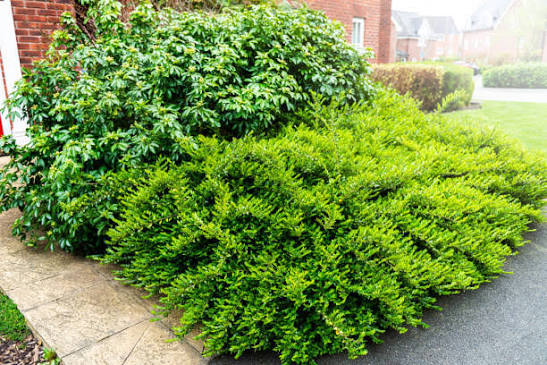
It sneaks up on every property eventually. The hollies that used to sit neatly under the windows now block them. The hedge along the fence has become a wall. The "small ornamental" by the front door is negotiating for the porch. Overgrown shrubs are the most common landscaping problem in any neighborhood — because shrubs never stop growing, and life gets busy.
The good news: most overgrown shrubs can be brought back. The dangerous news: the instinctive fix — cutting everything way back in one brutal session — is exactly how homeowners kill shrubs that survived years of neglect. Restoration is a skill with rules, and the rules depend on what you're cutting.
Here's how to rescue overgrown shrubs the right way.
To fix an overgrown shrub safely, you need one piece of plant science: not all shrubs can regrow from bare wood.
Years of shearing and neglect create a shrub with a thin green shell of foliage over a dead, twiggy interior. All the living growth is on the outer few inches. Now here's the divide:
This single distinction is why one neighbor's ruthless cut-back turned into lush regrowth while another's turned into a permanent skeleton. Before any major restoration, the species question has to be answered — it determines the entire strategy.
For most overgrown shrubs — and always for the can't-regrow-from-bare-wood species — the professional approach is staged reduction over multiple sessions, following the one-third rule: never remove more than about a third of the plant in one round.
Here's how a gradual restoration works:
Start inside the plant, not outside. Remove dead, diseased, and crossing branches entirely — this alone opens the shrub dramatically and redirects its energy. Then reduce overall size by up to a third, cutting back to junctions with healthy growth rather than shearing flat. Selective interior cuts open small windows that let light reach inner branches — waking up dormant growth deeper in the plant.
Let the shrub respond through a growing season. Light hitting the interior triggers back-budding — new green appearing inside the shell, which is precisely what makes the next reduction possible.
Each subsequent visit — typically the next season or two — reduces further, always cutting back to the new interior growth that the previous session generated. Over three or four staged rounds, the shrub walks down to its target size with living foliage the whole way, never crossing into bare-wood territory.
Yes, it takes a year or two. It also works — which one dramatic Saturday massacre frequently doesn't.
For vigorous species confirmed to regrow from old wood, there's a faster reset: rejuvenation pruning — cutting the entire shrub down to short stubs near the ground during dormancy, and letting it rebuild from scratch.
It's a legitimate professional technique with real conditions attached:
When it fits, rejuvenation produces a completely fresh, dense, healthy shrub. When it doesn't fit, it produces a dead one — which is why this call is worth a professional's eyes.
Whatever the strategy, these are the errors that sink shrub restorations:
Responding to overgrowth by shearing the outer shell harder just thickens the shell and deepens the dead zone. Restoration requires selective cuts that open the interior — the opposite of hedge-trimmer passes.
Hard pruning in late fall pushes tender growth into the first freeze. Heavy cutting during summer heat stresses plants already under strain. And cutting spring-flowering shrubs in winter deletes the year's blooms. The calendar is part of the technique.
A rescued shrub returned to zero maintenance is a future overgrown shrub with extra steps. Restoration only sticks when it hands off to a maintenance rhythm.
The annual "topping" of crape myrtles — hacking them to knuckles — isn't restoration; it's mutilation that ruins structure and invites disease. Overgrown crape myrtles get thinned selectively, never topped.
Here's the economics of shrubs in one sentence: maintaining a shape costs a fraction of rebuilding one. Quarterly trimming removes modest new growth four times a year — each visit quick, each cut light, the plant never stressed, the landscape never overgrown. Compare that to restoration: multiple heavy sessions across seasons, an awkward-looking yard in between, and genuine plant-loss risk if it's done wrong.
Quarterly shrub trimming is what makes the whole overgrowth problem simply... not happen. The hedge stays a hedge. The hollies stay under the windows. And nobody ever has to google whether their boxwood can survive what just happened to it.

Whether your shrubs need a careful rescue or just consistent upkeep, Kangaroo Outdoor Solutions handles it — expert restoration cuts and quarterly shrub trimming that keeps your landscape shaped, healthy, and permanently under control. Build your quote today and get your landscape back.