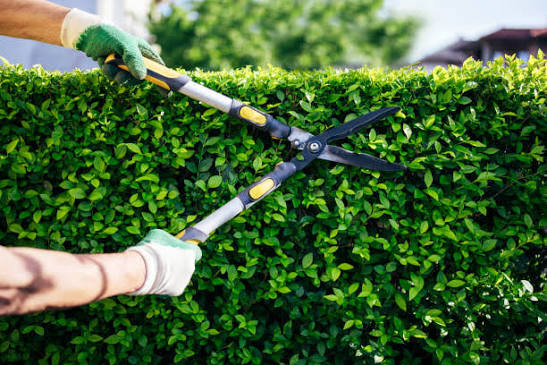
Here's an uncomfortable truth from the professional side of landscaping: a large share of the damaged, misshapen, and dying shrubs on any street weren't neglected. They were trimmed — enthusiastically, regularly, and wrong. Bad trimming outdamages no trimming, because every incorrect cut is a decision the plant has to live with, and some of those decisions are permanent.
The mistakes below are the ones professionals see constantly — each reasonable-looking in the moment, each quietly ruinous over seasons. Whether you trim your own landscape or evaluate someone who does, this is the list that protects your plants.
The most consequential mistake, because it looks identical to correct work — the difference is only the calendar. Every species has seasons when cutting helps and seasons when it hurts, and violating them turns grooming into damage.
The heavy fall cut is the classic: shearing shrubs hard in October or November stimulates a flush of tender new growth precisely when freezes are coming — growth that gets burned off, damaging the plant and wasting its energy at the worst moment. Fall trimming should be light shaping only, with the serious structural work saved for the dormant winter months.
The spring-bloomer blunder runs second: azaleas, and the other shrubs that flower in early spring, set their flower buds the previous year — so trimming them in winter or early spring cuts off the entire bloom before it opens. They get trimmed in the weeks right after flowering, and at no other serious moment. A landscape whose spring shrubs mysteriously stopped blooming almost always has a trimming-schedule problem, not a plant problem.
The hedge trimmer is a wonderful tool for the plants built for it — and a slow-motion disaster applied to everything else. Boxwood, dwarf yaupon, and the formal hedge species take shearing beautifully. But run the same trimmer over the naturally graceful species — the arching abelias, the layered nandinas, the loose viburnums — and the result is the landscape of green meatballs: every plant forced into the same ball or box, its natural character destroyed, its interior slowly dying.
That interior death is the hidden half of the mistake. Constant surface shearing builds a thin green shell over a progressively hollow inside — sunlight never penetrates, inner leaves die off, and after a few years the plant is a fragile skin of foliage over bare brown sticks. Then one deeper cut, one storm, or one attempt to reduce the size exposes the dead interior — a hole that some species can never refill. Proper trimming mixes methods: shear the shearing plants, hand-prune the natural ones by removing select branches at their origins, and periodically thin small openings in sheared surfaces so light keeps the interior alive.
The most famous trimming crime in Texas has its own name — crape murder — and every winter it claims another round of victims: healthy crape myrtles hacked down to thick knuckled stubs on the theory that it makes them bloom better. It doesn't. It produces whip-thin regrowth too weak to hold the flowers upright, builds ugly knuckle deformities at every cut point, invites decay into the main structure — and doesn't even control height, since the vigorous regrowth races back past the cut within a season or two.
Proper crape care is selective: suckers removed at the base, crossing and inward branches thinned at their origins in late winter, and the tree's natural sculptural form — the actual reason to own one — preserved. A trimming service's treatment of crape myrtles is the fastest reliable test of whether they know plants or just own equipment.
The subtle geometry mistake that kills more hedges than any pest. Casual trimming naturally over-cuts the top — it's the easy reach — and under-cuts the base, gradually shaping hedges wider at the top than the bottom. The physics then do the damage: the top shades the base, the shaded lower growth thins and dies, and the hedge develops the classic failure — full and green up high, bare legs and see-through gaps at exactly the height a privacy hedge exists to fill.
The professional rule inverts it: hedges trimmed slightly wider at the base than the top, faces sloping gently inward as they rise, so sunlight reaches the bottom growth forever. It's a small discipline, invisible when done right — and once a hedge has lost its legs, some species never regrow them. Geometry is destiny in hedge care.
The rescue instinct — a badly overgrown shrub cut back to intended size in one dramatic session — routinely kills or permanently disfigures plants. Severe one-time reduction removes too much of the plant's energy-producing foliage at once, exposes shaded interior wood that some species can't regrow from, and shocks root systems sized for a canopy that suddenly isn't there.
The professional version is staged: overgrown shrubs walked back down across multiple sessions over a season or more, each stage modest enough for the plant to absorb and re-green before the next. Slower, less satisfying, and the reason professionally restored shrubs survive their restorations. The deeper lesson is the quarterly rhythm itself — plants trimmed four times a year never get overgrown, so the dangerous rescue cutting never becomes necessary.
Read the list again and one theme repeats: every mistake comes from treating all plants as one plant and all seasons as one season. The fixes are all the same fix — species knowledge and timing, applied on a schedule. That's precisely what a proper quarterly shrub trimming service is: the right method for each plant, in the right season, at a frequency that keeps every cut small. The equipment is the least of it. The knowing is the service.

Give your landscape trimming that helps instead of hurts. Kangaroo Outdoor Solutions provides quarterly shrub trimming — species-smart methods, correct seasonal timing, and complete cleanup on every visit. Build your quote today and put your plants in knowing hands.