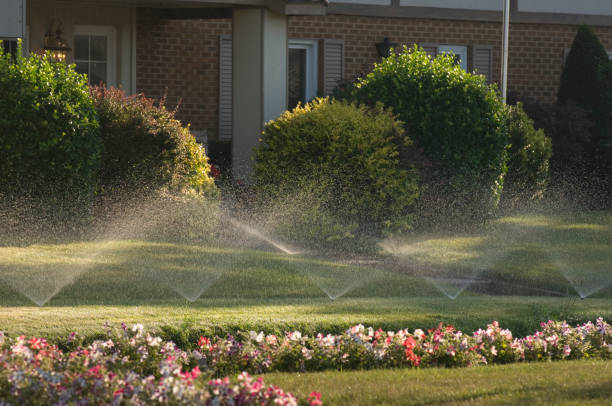
Most summer lawn disasters in North Texas share the same origin story. Not the heat — the heat was always coming. The real cause is an irrigation problem that started small, ran unnoticed for weeks, and finally showed itself as dead turf in July, when there was no margin left to recover. The broken head from May. The valve that started weeping in June. The controller still running spring settings into the hottest month of the year.
Every one of those disasters was preventable — not with expensive upgrades, but with a handful of simple irrigation maintenance habits that take minutes and catch problems while they're still cheap. Here are the routines that keep sprinkler systems working when the lawn's life depends on them, and where professional maintenance takes over from there.
The single most valuable irrigation habit costs nothing and takes fifteen minutes: run every zone manually while you actually watch. Irrigation systems fail invisibly because they operate before dawn — the geyser, the misaimed head, and the sputtering nozzle all perform to an empty audience for weeks. A monthly daylight run puts eyes on every head doing its job.
What to look for as each zone runs: heads that pop up fully and retract when done, spray patterns that are steady and complete rather than sputtering or gap-toothed, water landing on turf instead of fences, driveways, and streets, and no bubbling, gushing, or geysers where heads used to be. Also note the ground itself — any spot that's soggy before the zone even starts points to a leak or a valve problem that's been running on its own schedule.
Fifteen minutes, once a month, through the watering season. Most homeowners who adopt this one habit catch more problems in a summer than they'd previously noticed in years.
The gray box in the garage runs the entire operation, and most homeowners haven't opened it since move-in. Twice a season, give it five minutes: confirm the schedule matches the season — spring settings lighter, summer settings at full depth, fall stepping back down — and check every program slot, because forgotten programs still firing their old start times are one of the most common causes of mystery overwatering and inflated bills.
While you're there, confirm the start time finishes watering by mid-morning. Early morning watering soaks in with minimal evaporation and lets grass dry with the sunrise; evening watering leaves blades wet all night, which is the recipe for lawn fungus. If your controller has a seasonal adjust dial, make it the one setting you touch quarterly — full for peak summer, dialed down for the shoulder seasons.
The healthiest watering habit is also the simplest: fewer, longer sessions beat daily sprinkles every time. Two to three deep waterings a week train roots to grow downward toward moisture — building the deep-rooted lawn that survives heat waves. Daily shallow watering keeps roots huddled at the surface, producing a fragile lawn that wilts the moment the schedule slips.
On clay soil, pair the deep sessions with the cycle-and-soak method: split each watering into two or three shorter runs spaced an hour apart, so the slow-absorbing ground drinks everything instead of shedding the second half to the curb. Same water, dramatically more of it delivered.
Your lawn files irrigation reports constantly — learn to read them. A dry, browning patch in a specific shape usually traces a coverage gap: a head that failed, tilted, or clogged. A suspiciously lush green ring or streak marks a leak feeding one area constantly. A soggy zone that never dries points at a stuck valve. And a water bill that jumps without explanation is the meter reporting what the pre-dawn schedule has been hiding.
The habit is simple: when the lawn shows a pattern, run that zone in daylight and look. The answer is almost always visible within two minutes of watching.
Two dates a year deserve real attention. Spring startup is the big one — after a winter of dormancy and freeze events, the system needs a genuine inspection before summer duty: the backflow preventer checked as pressure returns, every zone run and watched, winter's cracked heads and shifted alignments repaired, and the controller rebuilt for the season ahead. And before winter, the smaller ritual: hoses disconnected, the backflow insulated against hard freezes, and the schedule dropped to dormant-season minimums.
The habits above catch what's visible — and that's genuinely most of it. But some of irrigation lives beyond the porch inspection: the valve diagnostics when a zone won't fire, the underground leak that needs locating, the pressure problems, the drip lines failing invisibly under the mulch, the repairs themselves. That's the natural handoff to professional irrigation maintenance — the scheduled zone-by-zone inspections where trained eyes run the same checks with deeper diagnostics, and the repairs happen in the same visit the problems are found.
The best arrangement for most homes is both layers: the homeowner habits catching things between visits, and the professional rhythm catching everything else — startup inspections, seasonal tuning, and repairs done in their cheap phase. Because the summer lawn disasters were never really about summer. They were about the weeks nobody was watching — and now somebody always is.

Put professional eyes on your system this season. Kangaroo Outdoor Solutions provides complete irrigation maintenance and repairs — inspections, tuning, and same-visit fixes that keep your lawn watered when it matters most. Build your quote today and make this the summer nothing slips through.