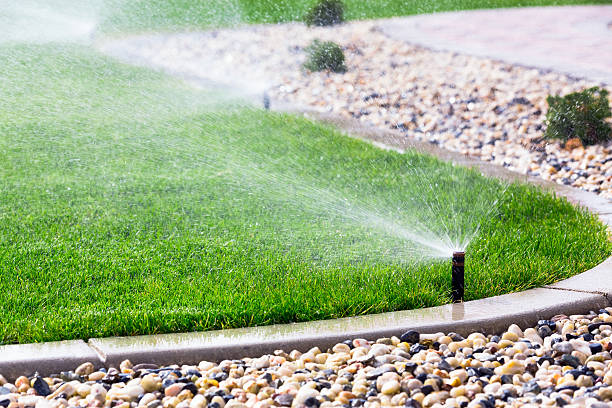
Irrigation has joined the smart-home era: controllers you program from your phone, systems that check the weather forecast before watering, sensors that skip cycles after rain. The marketing promises are big — slash your water bill, perfect watering automatically, never think about the sprinklers again — and the hardware is genuinely impressive.
So are the upgrades worth it? The honest answer: some deliver real value, some deliver convenience dressed as savings, and all of them share one dirty secret the boxes don't mention. Here's the clear-eyed guide to irrigation upgrades — what each one actually does, who benefits, and the prerequisite that determines whether any of it pays off.
Before evaluating any upgrade, absorb the principle that governs all of them: a controller — smart or dumb — only decides when and how long zones run. It has no idea what's happening at the heads.
The smartest controller on the market will faithfully, intelligently, weather-adaptively schedule a zone whose broken head is geysering thirty gallons a cycle into the street. It will optimize the run time of the rotor that stopped rotating and waters one soggy stripe. It cannot see the tilted spray misting the fence, the clogged nozzle leaving a dry crescent, or the drip line a shovel cut last spring. Garbage delivery, smartly scheduled, is still garbage delivery — and homes with neglected systems that install smart controllers get precisely optimized waste.
This is why the highest-ROI "upgrade" for most systems isn't hardware at all — it's a professional inspection and repair pass: every zone run and watched, heads fixed and realigned, coverage corrected, leaks found. That work routinely recovers more water (and more lawn health) than any controller swap — and it's the prerequisite that makes the smart hardware's savings math actually come true. Fix the body, then upgrade the brain.
Start with the least glamorous device in the category — and pound for pound, the best value in irrigation:
What it does: A rain sensor is a small device (typically mounted at the roofline or fence) that detects meaningful rainfall and interrupts scheduled watering until it dries out. That's the whole feature — and it's exactly the feature most systems need most, because the most visible irrigation waste in any neighborhood is sprinklers running in the rain, and the day after, and the day after that, while the soil is already saturated.
The honest assessment: Inexpensive, simple, effective — the closest thing to a no-brainer in this article. In a climate where spring and fall deliver real rain in bursts, a working rain sensor pays for itself quickly in skipped cycles, and prevents the fungus-friendly overwatering that soggy-season scheduling causes. Two caveats: they fail quietly with age (a dead sensor just... stops interrupting, and nobody notices for years — test yours), and basic models only respond to rain that already fell, not rain that's coming. Which is the smart controller's opening.
What they do: Smart (Wi-Fi/weather-based) controllers replace the gray dial box with a connected brain that adjusts watering using local weather data and forecasts — skipping ahead of predicted rain, scaling run times down in cool months and up in heat waves, and applying seasonal adjustment continuously instead of waiting for a human to remember the percentage dial. Plus the phone app: schedules, manual runs, and zone control from anywhere.
Where the value is real:
Where the marketing oversells:
The verdict: Worth it for most homes — especially the ones that never touched the old controller — provided the system underneath is sound and the setup is done thoughtfully. It's an optimization layer, and optimization layers reward good foundations.
Two hardware upgrades that out-earn their fame: converting bed spray zones to drip puts water at ornamental root zones instead of broadcast-spraying mulch and foliage — cutting bed water use substantially while improving plant health and reducing weed germination (broadcast-watered mulch is irrigated weed habitat). And high-efficiency rotary nozzles retrofitted onto conventional spray zones deliver water more slowly and uniformly — a meaningful fix for the runoff-prone clay and slope zones where standard sprays outrun the soil's absorption. Neither is glamorous; both address delivery quality, which is where the real losses live.
Pulling it together, here's the honest sequence for turning irrigation money into results:
And the thread through all four: someone knowledgeable has to look at the system, zone by zone, at least seasonally — because every device on this list manages when water flows, and only eyes on the heads verify where it lands. That's the part no box on the shelf contains, and it's exactly what routine professional irrigation maintenance is.

Thinking about upgrading your irrigation? Kangaroo Outdoor Solutions starts where the savings actually start — complete system inspection, repairs, and tuning — and keeps it all running right with year-round maintenance. Build your quote today and make every drop (and every dollar) count.