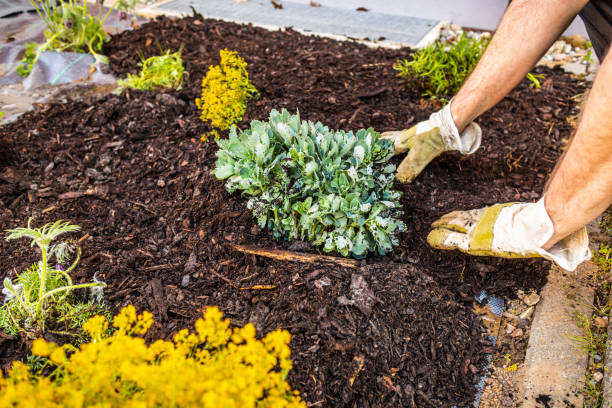
Ask any landscape professional in North Texas what single service delivers the biggest visual and practical payoff for flower beds, and you'll hear the same answer: fresh mulch.
Spring mulch installation is one of those rare services that's simultaneously cosmetic and deeply functional. It makes a landscape look instantly refreshed — crisp, dark, finished — while quietly working underground all year to protect your plants from the two things North Texas throws at them hardest: brutal summer heat and relentless weeds.
If your beds are looking faded, thin, or weedy heading into the warm season, here are seven reasons spring mulch installation deserves a spot at the top of your landscape to-do list — plus what proper installation actually looks like.
Let's start with the reason that matters most in Texas: moisture retention.
Bare soil in a North Texas summer loses water at an astonishing rate. Surface evaporation pulls moisture out of your beds within hours of watering, leaving shrub and flower roots scrambling. A proper 2–3 inch layer of mulch acts like a lid on the soil — dramatically slowing evaporation and keeping the root zone moist far longer between waterings.
The results are practical and immediate: healthier plants during heat waves, less irrigation demand, and lower water bills through the months when watering costs peak. When triple-digit stretches hit in July and August, mulched beds and bare beds live in two different worlds.
Mulch doesn't just hold moisture — it insulates. In summer, it shields the soil from direct sun, keeping root zones significantly cooler than exposed soil that can bake to plant-damaging temperatures. In winter, that same layer buffers roots against our sudden North Texas cold snaps, when temperatures can swing dramatically in a single day.
Ornamental shrubs, perennials, and seasonal color all perform better when their roots live in stable conditions. Spring mulch installation sets up that stability just before the most stressful season begins.
Here's a fact every homeowner fighting bed weeds should know: many common weed seeds need sunlight to germinate. A full, properly installed mulch layer blocks that light — stopping a large percentage of weeds before they ever sprout.
Fresh spring mulch, applied before the big warm-season weed flush, is the foundation of effective flowerbed weed control. And when mulch is combined with monthly bed maintenance to handle the weeds that do break through, beds stay dramatically cleaner all year with a fraction of the effort.
One important note: mulch suppresses weeds, but only at proper depth. Thin, decomposed, year-old mulch lets light through — which is exactly why beds get weedier as mulch ages, and why an annual spring refresh matters.
Quality organic mulch — shredded hardwood, native cedar, and similar materials — slowly decomposes over the seasons. That decomposition is a feature, not a flaw: it releases organic matter and nutrients into the soil below, gradually improving the heavy clay soil found across Parker County and the west Fort Worth area.
Over years of consistent mulching, bed soil becomes darker, looser, and more fertile — better draining, easier for roots to penetrate, and richer in the microbial life healthy plants depend on. It's slow-motion soil improvement that happens automatically.
A generous mulch ring around trees and shrubs creates a buffer zone that keeps string trimmers and mower decks away from trunks and stems. Trimmer damage to bark — so common on unprotected trees — wounds the plant's vascular system and opens the door to pests and disease. Mulch rings prevent the problem entirely while also eliminating the awkward mow-around-the-trunk dance.
Mulch also softens the impact of hard rains, preventing the soil splash and erosion that compact bed soil and splash disease organisms onto lower foliage.
There's no faking it: fresh mulch transforms how a property looks. The deep, uniform color makes green plants pop, defines bed lines, and gives the entire landscape a crisp, professionally maintained appearance — the landscaping equivalent of a fresh coat of paint.
Real estate professionals consistently point to landscape presentation as a driver of first impressions and home value, and few services deliver more visual impact per dollar than spring mulch installation. If you're refreshing a property to sell, hosting events, or simply want the best-looking beds on the street, mulch is the fastest win available.
Why spring specifically? Because spring mulch installation positions every benefit exactly when it's needed:
There's more to mulch installation than dumping bags around shrubs. A professional installation includes:
Existing weeds removed, debris cleared, old matted mulch broken up or removed if excessive, and bed edges redefined for a crisp finish.
The target is a consistent 2–3 inches — enough to suppress weeds and hold moisture, but not so deep that water and oxygen can't reach the soil. Piling mulch too thick is a common DIY mistake that suffocates roots.
Mulch should be pulled back from tree trunks and shrub stems, never piled against them. "Mulch volcanoes" trap moisture against bark, causing rot, disease, and pest problems. Proper installation keeps a small gap around every trunk and stem.
Even distribution, defined edges, and hard surfaces blown clean — so the finished product looks as good as it functions.
Few landscape services work as hard as mulch. From the day it's installed, spring mulch is cooling your soil, saving your water, blocking your weeds, feeding your beds, protecting your plants, and making your whole property look sharp — all at once, all season long.

Kangaroo Outdoor Solutions provides professional spring mulch installation for homes across Weatherford and surrounding North Texas communities — proper prep, correct depth, and a clean, beautiful finish every time. Build your quote today and give your beds the best start to the season.