Every maintenance decision has a shadow option that never gets priced: just don't. Skip the program, park the budget, let the yard coast for a year — how bad could it be? The lawn's established, the sprinklers work, the shrubs are fine. It feels like pure savings: every month without a service invoice is money kept.
Except landscapes don't coast. They compound — in one direction or the other. A maintained property compounds value: denser turf, cleaner beds, healthier plants, problems caught small. A neglected one compounds liabilities on a schedule so predictable that professionals can narrate it month by month. So let's actually run the experiment on paper: a well-kept North Texas property, maintenance stopped cold in January, followed honestly for twelve months — with the invoice at the end.
Here's the seductive part: nothing visibly happens. The lawn is dormant and brown like every winter lawn; the shrubs are quiet; the beds hold last year's mulch. The skipped services — dormant weed control, the year's cornerstone pre-emergent application, winter structural pruning — are all invisible work. Two months in, the do-nothing experiment looks like genius: the yard is indistinguishable from the neighbors', and the budget is untouched.
But the ledger has already opened. The missed late-winter pre-emergent is the single most expensive skip of the entire year — it just doesn't invoice until summer. And under the dormant lawn, the winter weeds that dormant-season treatment would have erased are quietly flowering and seeding: henbit's purple haze arrives in February, unopposed, making next winter's deposit.
Spring green-up arrives, and the property runs its opening lap on last year's momentum — the reserves banked by the previous fall's feeding power a respectable wake-up. But the gaps open fast:
By April's end, the property still looks okay from a car — and is structurally behind on every front at once.
Summer is when the compounding goes public:
Late summer converts neglect into hard costs:
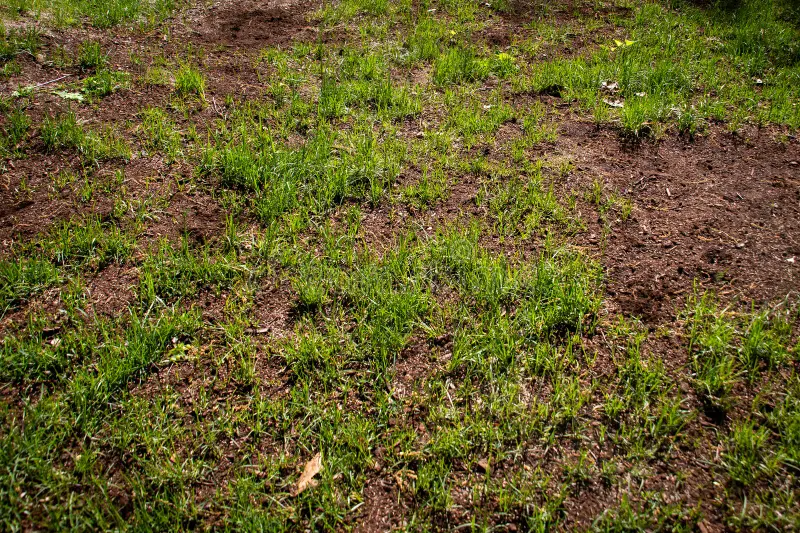
Stand at the curb in December and inventory the year of "savings": a lawn that's thin-to-dead in patches with a weed population at every layer (this year's seeding guarantees the next three years' pressure), beds indistinguishable from the weeds that own them, mulch functionally gone, shrubs one full year overgrown (some now needing staged multi-season restoration rather than a trim), an irrigation system with an unknown number of accumulated failures, and next spring pre-sabotaged — no reserves banked, no barriers down, compaction locked in.
Now price the recovery against the skipped maintenance — because everything above has a restoration line item, and restoration always outprices rhythm:
Add it honestly and the pattern every professional knows appears: the year of doing nothing costs more than the year of maintenance it replaced — and delivers a worse property at the end of it. The "savings" were a loan, taken against the landscape, at unfavorable interest — with the balance due in year two, when the recovery spending and the resumed maintenance both land.
The honest framing was never maintenance versus free. It's rhythm versus rescue — the same property carried by steady scheduled care (each service modest, each preventing its own category of failure) or by alternating neglect and expensive intervention. The rhythm is cheaper across any multi-year window, and it's not close — because in landscapes, prevention isn't a virtue. It's the discount.

Skip the expensive experiment. Kangaroo Outdoor Solutions' Complete Maintenance Program runs the whole year's rhythm — mowing, turf care, irrigation, beds, shrubs, and seasons — for less than neglect ever costs. Build your quote today and keep your property compounding in the right direction.