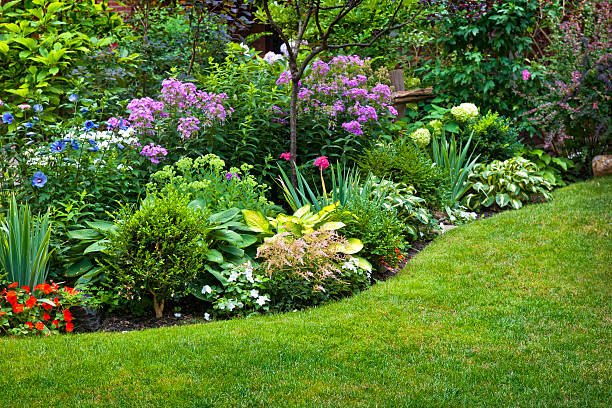
Most homeowners can name every plant in their vegetable garden and not a single shrub in their front beds. It's understandable — the shrubs came with the house, planted by a builder or a previous owner, and they've just... been there, growing, needing trimming, occasionally dying mysteriously.
But knowing what's planted in your beds isn't trivia. Every shrub species has its own trimming tolerance, timing preferences, problem list, and warning signs — and the difference between the right care and generic care is the difference between a landscape that thrives for decades and one that slowly declines. Here's an identification and care guide to the shrubs most likely living in your Texas beds right now.
How to identify it: Small, dense, rounded shrubs — often sheared into tidy globes — with tiny, smooth-edged oval leaves (no spines, despite the "holly" name) on gray stems. If your front bed has a row of neat green meatballs, this is very probably them.
Why it's everywhere: Dwarf yaupon is nearly indestructible — native-tough, drought-tolerant once established, pest-resistant, and happy in sun or part shade. Builders plant it by the thousands because it survives neglect.
Care notes: Slow-growing and endlessly shear-tolerant — the rare shrub that genuinely accepts the ball treatment. Quarterly shaping keeps it crisp; it also takes harder renovation cuts better than most. The main care mistake is overwatering — this is a plant that wants to dry out, and soggy irrigation zones kill more yaupons than drought ever will.
How to identify it: Dense, fine-textured shrubs with small, glossy, rounded leaves in opposite pairs — the classic hedge and formal-garden plant, usually sheared into low hedges, cones, or globes. Crush a leaf: many boxwoods have a distinctive musky scent.
Why it's planted: Nothing does formal structure like boxwood — crisp hedges, defined lines, year-round deep green.
Care notes: Here's the critical fact from earlier in this series worth repeating: boxwood cannot reliably regrow from bare wood. Years of shearing build a thin green shell over a bare interior — and any cut past the shell leaves a permanent hole. Boxwood care is therefore preventive by definition: regular light trims that never require deep cuts, ideally with occasional selective hand-pruning to let light into the interior. Watch also for winter burn (bronzed foliage after hard freezes) and keep irrigation moderate — boxwoods resent wet feet.
How to identify it: Vigorous, upright shrubs with glossy, oval, medium-sized leaves, often used as tall hedges and screens — plus sprays of small white flowers in late spring (with a strong fragrance people either love or hate), followed by small dark berries. Waxleaf ligustrum, with its thick shiny foliage, is the common Texas form.
Why it's planted: Speed and screening — ligustrum builds a privacy wall faster than almost anything else in the nursery.
Care notes: That speed is the whole care story: ligustrum can push feet of growth in a season, making it the shrub most likely to swallow windows, walkways, and its more polite neighbors. It shrugs off hard pruning (it's a vigorous regrower from old wood — the anti-boxwood), so restoration is forgiving; the challenge is simply keeping up. Quarterly trimming is the minimum for shaped ligustrum; screens can run shaggier but still need boundary enforcement. If a bed looks "eaten" by one plant, ligustrum is a usual suspect.
How to identify it: Low, mounding shrubs with leathery, dark-green oval leaves and — the giveaway — clusters of pink or white spring flowers, followed by blue-black berries. Ubiquitous in commercial landscapes and front-yard foundation rows.
Why it's planted: Neat natural mounding (minimal trimming needed), spring bloom, and general toughness in sun and heat.
Care notes: Indian hawthorn's nemesis is entomosporium leaf spot — a fungal disease producing red-to-purple spots on leaves, then heavy leaf drop and thinning, spread by water splashing on foliage. Care is mostly disease management: avoid overhead spray irrigation hitting the leaves (drip-watered hawthorns stay dramatically healthier), maintain airflow with light selective trimming rather than dense shearing, and clean up dropped infected leaves. A thinning, spotty hawthorn is telling you about its watering method, not its age. Trim lightly after spring bloom — heavy or ill-timed shearing cuts off next year's flowers.
How to identify it: Multi-trunked large shrubs/small trees with smooth, mottled, peeling bark (beautiful in winter), and unmistakable summer flower clusters in whites, pinks, purples, and reds — Texas's signature summer bloomer.
Why it's planted: Months of summer color, sculptural form, and near-perfect suitability to Texas heat.
Care notes: One rule towers over all others: never top it. The annual knuckle-chopping "crape murder" seen everywhere destroys the natural form, forces weak whip growth, and invites pests and rot — and it's completely unnecessary, since crape myrtles bloom beautifully on natural structure. Correct care is selective thinning in late winter: removing crossing branches, suckers, and clutter while preserving the canopy shape. If a crape's been topped for years, restoration through structured thinning takes patience but works. Watch summer foliage for sooty black mold — the tell-tale of aphid activity above.
Three more you'll commonly meet: Glossy abelia — arching, fine-textured shrubs with small leaves and delicate white-pink summer bells; graceful when selectively pruned, ruined into whiskery boxes by shearing (trim by cutting whole arching canes, not buzzing the surface). Elaeagnus (silverberry) — the bed-eating monster with silvery-backed leaves and wild whip-like shoots that appear weeks after every trim; plant it with room or commit to relentless quarterly discipline. Nandina — bamboo-look canes, lacy foliage turning red in winter, red berry clusters; cared for by cutting individual canes at varied heights, never flat-topping.
Look back across this lineup and notice: the "same" trimming visit means different work at every plant. The yaupon gets sheared; the boxwood gets protected from over-cutting; the ligustrum gets aggressively contained; the hawthorn gets airflow and post-bloom timing; the crape gets thinned, never topped; the abelia gets cane-pruned. Generic buzz-everything trimming — the leaf-blower-crew special — treats them identically and slowly degrades most of them. That's the real case for professional quarterly shrub trimming: not just showing up four times a year, but knowing what's planted and giving each species the cut it actually needs.

Know what's in your beds — or want someone who does? Kangaroo Outdoor Solutions provides quarterly shrub trimming with species-appropriate technique and timing for everything in your landscape, plus complete cleanup every visit. Build your quote today and give every shrub the right care.