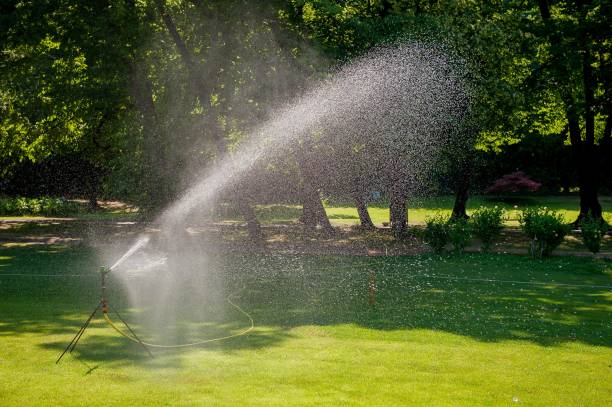
Nobody sets out to run their sprinkler system badly. The mistakes that waste water and hurt lawns across North Texas aren't carelessness — they're reasonable-seeming habits that happen to be wrong, passed along by neighbors, inherited from previous owners, or simply never questioned because the system turns on and water comes out. That low bar hides a lot.
Here are the most common sprinkler mistakes homeowners make — why each one seems sensible, what it's actually costing, and the fix. If you recognize a few of your own habits below, you're in the majority, and every one of them is correctable this week.
The most common mistake, built on the most understandable logic: it's hot, the lawn's thirsty, so water it daily. But daily light watering trains a lawn into fragility. Moisture that only ever wets the top inch of soil keeps roots in the top inch of soil — and a shallow-rooted lawn is one bad day from crisis, wilting within hours of a hot afternoon and collapsing the moment the schedule slips.
The fix is the deep and infrequent rule: two to three longer sessions per week that soak moisture down deep, then let the surface dry between. Roots chase the deep water downward, and a deep-rooted lawn rides out the heat waves that devastate its daily-watered neighbor. Same total water or less — completely different lawn.
Running the system at night feels efficient — no sun, no evaporation. But grass that gets wet at 8 p.m. stays wet until morning, and eight-plus hours of warm, damp darkness is the exact environment lawn fungus needs. Brown patch, the disease that carves dead circles through St. Augustine and Bermuda every spring and fall, feeds on precisely this schedule.
The fix: early morning, ideally finishing by mid-morning. You get the same low-evaporation benefit, and the blades dry with the sunrise — closing the disease window while wasting nothing.
Most controllers in most garages are running a schedule someone set years ago — the same minutes, the same days, through spring rains, summer scorchers, and fall cool-downs alike. But a lawn's water needs swing enormously across the year, which means a static schedule is guaranteed wrong most of the time: drowning the lawn in the cool months, inviting fungus and padding the bill, or underserving it in peak heat.
The fix is seasonal adjustment — the schedule stepped up as summer builds and down as fall arrives, four touches a year minimum. While you're in the controller, check every program slot: forgotten programs still firing their old start times are among the most common causes of mystery overwatering, and finding one takes two minutes.
Ten minutes per zone across the board feels fair. It's actually guaranteed to be wrong, because different head types deliver water at completely different rates. Rotor heads — the ones sweeping streams across big lawn areas — apply water slowly and need long run times to deliver real depth. Spray heads — the fixed misting fans — apply water fast and need a fraction of that time. Identical minutes means the rotors are being teased while the sprays flood and run off.
The fix: run times matched to head types — long for rotor zones, short for sprays, drip beds on their own logic entirely. And on our clay soil, split the longer runs into cycle-and-soak — two or three shorter cycles spaced apart — so the slow-absorbing ground drinks everything instead of shedding half to the curb.
The structural mistake underneath all the others. Sprinklers run before dawn, so their failures — the broken head geysering, the pattern watering the fence, the sputtering nozzle leaving a dry crescent — perform to an empty audience for weeks. The lawn eventually reports the problems, but slowly and ambiguously: brown patches blamed on heat, soggy spots blamed on rain, a rising bill blamed on summer.
The fix costs fifteen minutes a month: run every zone manually in daylight and watch. Heads rising and retracting, patterns full, water landing on turf — most homeowners who adopt this single habit catch more problems in one season than they'd noticed in years.
The tilted head that's been watering the sidewalk since spring. The zone that seems a little weak. The corner that's always soggy. Small irrigation problems have a reliable trajectory: they run invisibly, waste water continuously, and eventually convert into the expensive versions — the dead zone of turf, the fungus outbreak, the water bill with a story. Every one of them was a quick fix in its first week.
The fix is treating symptoms as appointments: when the lawn shows a pattern or the system shows a quirk, that zone gets watched and the issue gets repaired now, in its cheap phase — not after summer converts it.
Notice what every mistake shares: they all thrive on inattention, and they all fall to someone knowledgeable actually looking at the system on a schedule. That's precisely what professional irrigation maintenance is — the seasonal checkups where every zone runs under trained eyes, the schedules get rebuilt for the season, the small failures get repaired in the same visit they're found, and the drip lines and valves get the deeper diagnostics no porch inspection reaches. The habits above will make you better than most homeowners. The maintenance rhythm makes the system better than most systems — and the lawn and the water bill both show it.

Get the mistakes out of your system for good. Kangaroo Outdoor Solutions provides complete irrigation maintenance and repairs — seasonal checkups, schedule tuning, and same-visit fixes across every zone. Build your quote today and water like the system was meant to.