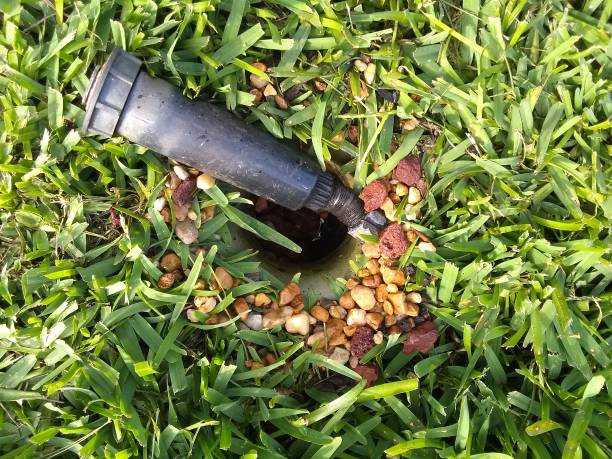
Nobody panics over a cracked sprinkler head. It's a small part, on a system that mostly works, running at 5 a.m. while everyone sleeps. It goes on the mental "eventually" list — and stays there.
Here's the problem: irrigation systems don't bill you for their failures directly. They bill you indirectly — through the water meter, the dead patch of turf, the fungus outbreak, the shrub that didn't make it through July. By the time the costs surface, they've been quietly accumulating for months.
Let's do the math nobody does: what small, ignored irrigation problems actually cost — and why routine irrigation maintenance is one of the highest-return services a property can buy.
Start with the meter, because the numbers get big fast.
A single broken sprinkler head doesn't just fail to water its zone — it gushes, dumping many gallons per minute at ground level while it runs. Run that zone a few times a week, all season, and one cracked head can waste thousands of gallons a month. On tiered summer water rates, that's real money geysering into the gutter — before sunrise, where no one sees it.
Underground line leaks are worse, because they never stop hurting. A leak in a pressurized line seeps around the clock, not just during watering cycles. Homeowners routinely discover — after months of mysteriously climbing bills — that a silent leak was the most expensive "appliance" in the house.
A valve that doesn't fully close lets water weep through its zone continuously. The lawn above stays suspiciously soggy; the bill stays suspiciously high; and because the flow is gradual, it can hide for an entire season.
The cruel part: every one of these problems is cheap to fix and expensive to ignore. A head replacement or valve repair costs a fraction of a single summer's wasted water.
Water waste stings, but the second cost center is bigger: what broken irrigation does to everything it was supposed to protect.
A tilted head or coverage gap creates a dry zone — and in summer heat, dry zones die. Re-sodding dead sections of lawn costs many times more than the head adjustment that would have prevented it. Multiply across a season of unnoticed coverage failures and the sod bill dwarfs everything.
The soggy zone from a stuck valve or leaking head isn't "extra healthy" — it's drowning. Saturated roots suffocate, fungus like brown patch erupts in the constant moisture, and moisture-loving weeds such as nutsedge move in and are notoriously miserable to evict. Fungicide treatments, weed battles, and turf recovery all trace back to one leaky valve.
Turf is replaceable by the pallet; mature landscaping isn't. A drip zone failure that goes unnoticed for three summer weeks can kill established shrubs and stress ornamental trees that took years to grow. Replacing mature landscape plants is one of the most expensive line items in all of property care — and it's routinely triggered by an irrigation failure nobody caught.
In expansive clay soils, chronic leaks near the slab create the exact moisture swings that foundation experts warn about. That's not a landscaping bill — that's a foundation bill, and no one wants to meet it.
Here's the cost center nobody counts: a broken irrigation system quietly cancels your other lawn investments.
Every service dollar spent on a lawn assumes the water is being delivered correctly. When it isn't, you're not just losing the water — you're losing a percentage of everything else.
Irrigation failures have a perfect camouflage system:
This is precisely why "wait until something looks wrong" is the most expensive irrigation strategy there is. By the time it looks wrong, it's been wrong for a while.
The antidote to all of it is almost anticlimactic: someone who knows what they're looking at, running every zone, on a schedule. A professional irrigation maintenance visit:
Each item is small. Together, on a routine schedule, they eliminate every cost center in this article — the wasted water, the dead turf, the drowned beds, the sabotaged fertilizer — for a fraction of what any single one of those failures costs.
Your irrigation system will collect its fee either way. Pay it in routine maintenance — quick inspections, small repairs, seasonal adjustments — or pay it in water bills, sod pallets, fungicide, and replacement shrubs. The system doesn't care which. Your budget definitely does.

Stop paying for problems you can't see. Kangaroo Outdoor Solutions provides routine irrigation maintenance and repairs — every zone inspected, every issue caught early, every drop delivered where it belongs. Build your quote today and put your sprinkler system on the payroll instead of the expense report.