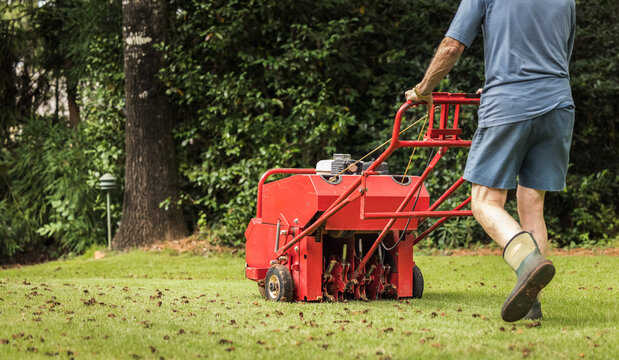
Core aeration has a visibility problem. The condition it fixes — compacted soil — develops invisibly, underground, without a single dramatic symptom. So while homeowners respond quickly to brown patches and visible weeds, compaction just quietly tightens its grip year after year, and the lawn's slow decline gets blamed on everything except the actual cause.
But compaction does leave evidence — a whole trail of it — for anyone who knows what to look for. Here are the clear signs your lawn needs core aeration, from the tests you can run in five minutes to the patterns hiding in plain sight, plus the honest guide to how urgent each sign is.
The most reliable sign on the list, and the easiest to check. Turn on a sprinkler zone and watch the ground: healthy soil drinks the water down as fast as it lands; compacted soil fills up in minutes and starts shedding — sheeting across the surface, pooling in low spots, streaming toward the curb.
If your irrigation produces runoff before the cycle finishes, your soil has stopped absorbing at the rate it's being watered — and every cycle since that started has been partially wasted, delivering a fraction of its water to the roots while the rest paid the runoff tax. Puddles that linger after rain tell the same story. This sign carries double urgency because it compounds: you're paying full price for partial watering while the lawn shows chronic mild drought stress despite a generous schedule.
The classic field test, and still the best. Take a long screwdriver to a few spots around the lawn — especially the areas where grass struggles — and push it into the soil. In healthy ground it slides in several inches with moderate pressure. In compacted ground it fights: hard resistance an inch or two down, or needing real body weight to advance.
The translation is direct: whatever resistance the screwdriver meets, your grass roots meet constantly — and roots don't have body weight to lean on. Where the screwdriver struggles, roots stop, which is why compacted lawns live on shallow root systems trapped in the top inch or two of workable soil. Test after a normal watering, not during drought — bone-dry clay resists everything — and compare spots: the difference between your best area and your worst is usually the compaction map drawing itself.
Compaction is caused by pressure, so it concentrates where pressure concentrates — and the lawn's thin spots trace the pattern. The path to the back gate. The strip where everyone cuts the corner. The kids' goal-mouth. The edges along the driveway where feet and tires wander. If your lawn's thinning follows the routes of feet, paws, and wheels, you're looking at compaction damage in its purest form: ground pressed too tight for roots, thinning turf exactly along the lines of use.
The confirming detail: weeds moving into those same zones. Several common invaders tolerate compacted soil far better than turf grass does, so hard ground doesn't just thin the lawn — it hands the openings to the competition.
Some lawns ride through August heat with composure; others collapse in the first triple-digit stretch. The difference is usually root depth — and root depth is usually soil. Shallow-rooted turf on compacted ground lives entirely in the surface layer that bakes dry fastest, so it browns early, wilts fast, and recovers slowly. If your lawn consistently suffers summer worse than comparable lawns nearby — same grass, similar watering — the gap is very likely underground: their roots go deep, yours physically can't.
The subtlest sign: everything you apply seems to do less than it should. Feedings produce muted results, watering never quite satisfies, and the lawn stays stubbornly mediocre despite real care. Sealed soil explains it — nutrients and water sitting on a surface they can't penetrate, feeding the thatch instead of the roots. When a lawn seems immune to effort, the effort usually isn't reaching it.
Beyond the symptoms, two situations warrant aeration on their principle alone. New construction homes top the list: builder lots sit on ground compacted by heavy equipment for months — machine compaction far beyond anything foot traffic produces — and new-build lawns typically need an aggressive aeration rhythm for their first several years, whatever the symptoms show. And North Texas clay itself is the standing condition: soil this fine-particled compacts continuously under ordinary residential life, which is why the twice-yearly spring and fall rhythm is the regional standard rather than an upsell. On clay, the honest question isn't whether the lawn needs aeration — it's whether it's been more than six months since the last one.
Run the checks and score honestly. One sign, mild — get on the seasonal schedule and stay ahead of it. Multiple signs — the runoff plus the screwdriver fight plus the traffic thinning — means compaction is actively costing you turf and water right now, and the next spring or fall window should have your name on it. And if the tests come back clean, congratulations: keep the rhythm that got you there, because on this soil, clean results are always a lease, never a deed.
The evidence was there all along. Now you know how to read it — and what to do about what you find.

Recognize the signs? Kangaroo Outdoor Solutions provides professional spring and fall core aeration — deep hollow-tine cores, irrigation flagged, timed with your lawn's feeding schedule. Build your quote today and open your soil this season.