Every spring and fall, it happens on the best lawns in the neighborhood: one day the yard is covered in what looks like scattered goose droppings — thousands of small, thumb-sized dirt plugs lying everywhere — and the homeowner seems completely unbothered. A few weeks later, that same lawn is noticeably thicker and greener than everyone else's.
Those plugs are the visible evidence of core aeration, and if you've never watched the process up close, it's worth understanding exactly what happens — because knowing what aeration looks like at each stage answers the questions every first-timer asks: What is that machine doing? Are those plugs supposed to stay there? Why does my lawn look worse before it looks better?
Here's core aeration, step by step, exactly as it looks on your lawn.
The first thing you'll see on aeration day isn't the machine — it's the flags. Small marker flags go in at every sprinkler head, and shallow lines, valve boxes, and any buried hazards get marked too.
This step looks minor and is anything but. An aerator's tines punch several inches into the ground — exactly the depth where sprinkler heads and shallow irrigation components live. A flagged yard means the machine steers around every vulnerable point; an unflagged yard is how DIY rental-weekend aerations turn into sprinkler repair bills. If you ever watch an aeration crew skip straight to the machine without walking the yard first, that's a corner being cut.
The lawn should also be lightly moist on aeration day — watered a day or so before if rain hasn't handled it. Tines pull clean, deep plugs from moist soil; bone-dry compacted clay fights the machine and yields short, crumbly cores. (Soaked mud is equally wrong — the holes smear closed.) The moisture level is part of the craft.
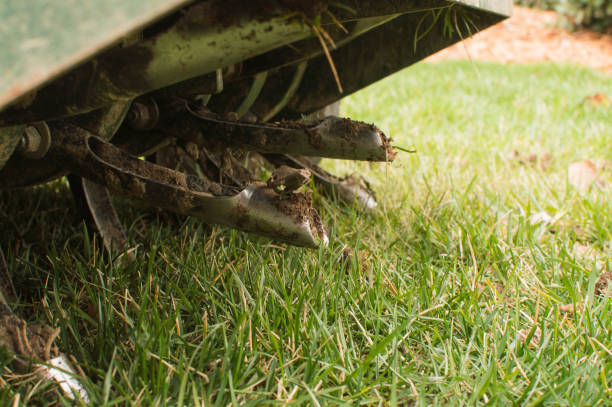
The core aerator itself looks like a cross between a mower and a small tiller: a walk-behind (or tow-behind, on big properties) unit with a drum or rack of hollow steel tines — think rows of sharpened metal tubes. As the machine rolls, the tines punch into the turf, and because they're hollow, each punch extracts a plug of soil and ejects it onto the surface.
This is the detail that separates real core aeration from its imitators, and it's visible from ten feet away:
So the tell is on the ground: if there are no plugs, it wasn't core aeration.
A quality pass covers the lawn systematically — commercial machines pulling plugs deeper and more consistently than rental units — often with double passes in different directions across the most compacted zones (the areas that need it most give up the shortest plugs on the first pass).
When the machine finishes, your lawn is covered in thousands of soil plugs, each a couple of inches long, and dotted with the open holes they came from. First-timers are reliably alarmed. Two reassurances:
The plugs stay. The instinct is to rake them up — resist it. Those cores are your topsoil, full of nutrients and soil microbes, and their job now is to break down right where they lie, crumbling back into the turf over roughly one to two weeks (faster with rain, irrigation, and mowing, which chops them up harmlessly). Removing them throws away soil your lawn wants back. They look untidy for a week or two; that's the entire cost.
The holes are the product. Each open channel is now doing everything aeration promises: drinking in water that used to run off, pulling oxygen down to roots that were suffocating, giving fertilizer a direct route into the root zone, and offering roots an open corridor to expand into. A freshly aerated lawn after its first deep watering is a genuinely different soil environment than it was that morning.
What happens in the days after aeration determines how much value the holes deliver — and this is where the service pairs into a system:
Here's a professional habit worth stealing: look at the plugs before they crumble. They're free soil-core samples of your lawn, and they talk:
Flags, machine, plugs, holes, water, feed — and a few untidy days traded for a season of open soil. Core aeration is one of the least glamorous services in lawn care to watch and one of the most consequential to skip, which is exactly why the best lawns in any neighborhood are the ones dotted with dirt plugs twice a year, looking briefly worse on their way to looking reliably better.

Ready to see those plugs on your own lawn? Kangaroo Outdoor Solutions provides professional spring and fall core aeration — irrigation flagged, deep hollow-tine cores, and perfect pairing with fertilization. Build your quote today and open your soil up.