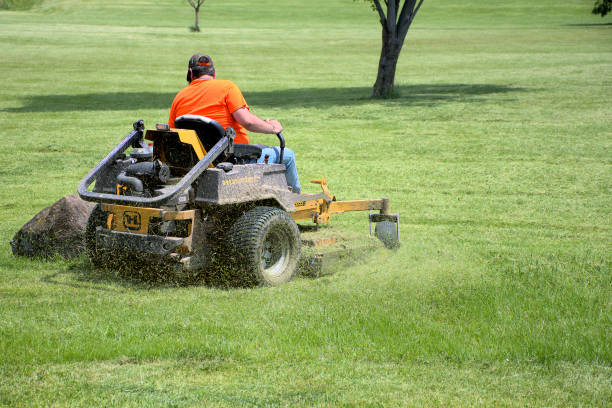
Homeowners who sign up for weekly lawn maintenance usually expect one thing: a lawn that's mowed regularly. What they actually get — and what surprises most of them — is a lawn that changes, visibly and progressively, over the months that follow. Because consistent weekly care doesn't just keep a lawn tidy; it compounds.
If you've been considering weekly lawn maintenance and wondering what you'd actually see for your money, here's the honest timeline — what changes in the first week, the first month, the first season, and the first full year.
The first visit establishes the baseline. If the lawn's been kept up, it's a standard service: mow at the correct height for the grass type and season, crisp edging along every hard surface, string trimming at the fences and obstacles, and a full blow-off. If the lawn's been struggling or overgrown, the first visit (or two) walks it down properly — staged cuts rather than one scalping buzz, because shocking overgrown turf browns it exactly when it's supposed to be improving.
Either way, the immediate change is the finish: true edges instead of fuzzy borders, uniform height instead of patchwork, clean pavement instead of clipping drifts. The property reads maintained from the street — and that look now has a renewal date every seven days.
By the fourth visit, the weekly rhythm starts doing what one-off mows never can:
This is where neighbors start commenting. Consistent height, frequency, and sharp blades change the grass itself:
If a turf program, irrigation attention, or aeration joins the weekly service during this stretch, the effects multiply — the mowing rhythm is the platform every other service builds on.
By season's end, the compounding is visible to anyone: a denser, greener, more uniform lawn with crisp lines, fewer weeds, and no bad weeks. Because that's the real product of weekly lawn maintenance — the elimination of bad weeks. No shaggy stretch before the catch-up mow, no vacation lapse, no month where life got busy and the lawn showed it. The lawn looks sharp on random Tuesdays, which is the standard no burst of weekend effort can match.
And the practical ledger fills in alongside: a season's worth of Saturdays returned, equipment un-bought and un-maintained, and problems caught early instead of discovered late.
Here's the part that only shows up with time: lawns on consistent weekly maintenance diverge from their neighborhood. Each season of proper cutting builds on the last — deeper roots, tighter turf, cleaner edges maintained rather than restored — while the sporadically maintained lawn next door repeats its stress cycles annually. Two years in, they're not the same kind of lawn anymore. That's not a mowing difference. That's a consistency difference, compounded.
If the timeline sounds right, the checklist for getting it: a locked schedule with confirmations and communication, the full visit every time (mow, edge, trim, blow — not just the mow), seasonal height adjustments, the same crew week to week, and a company that can layer the other services — turf treatments, irrigation, aeration — onto the same coordinated calendar when you're ready.

Ready to see what your lawn does with 52 good weeks in a row? Kangaroo Outdoor Solutions provides complete weekly lawn maintenance — reliable scheduling, full-service visits, and clear communication every week. Build your quote today and start the timeline.