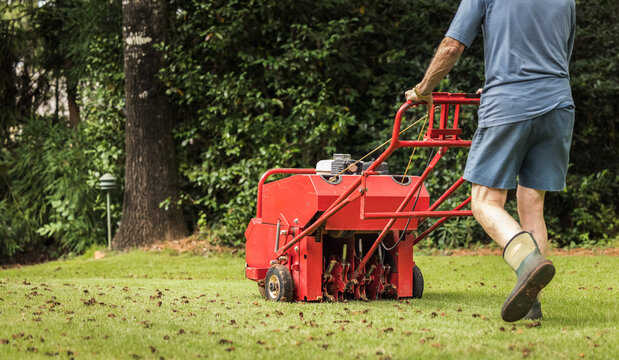
Core aeration is a professional service, but it isn't a spectator one. What happens in the days before the machine arrives — and especially in the weeks after it leaves — has a real effect on how much the lawn gets out of the visit. The aeration itself opens the soil; the homeowner's small moves around it decide how fully the lawn exploits the opening.
None of it is difficult. Here's the complete before-and-after checklist for aeration day: the prep that makes the service go right, and the aftercare that multiplies the results.
Water the lawn a day or two ahead. This is the single most useful prep item, and the reasoning is mechanical: aeration tines penetrate deepest in soil that's moist — not soggy, just watered within the last day or so. Bone-dry clay resists the tines and yields short, shallow cores; saturated ground turns the pass muddy. A normal irrigation cycle a day or two before the appointment sets the soil in the sweet spot, and deeper cores mean more decompaction per pass — the whole service, upgraded by one watering.
Flag the sprinkler heads. The hollow tines punch several inches deep across the entire lawn, and irrigation components sit exactly in that zone. Marking every sprinkler head — and any shallow valve boxes, buried lines you know about, invisible dog fence wire, or landscape lighting runs — protects the system from tine strikes. Small marker flags from any hardware store do the job; a professional crew will typically flag heads as part of the service, but nobody knows your yard's buried surprises like you do, and five minutes of flags beats any repair.
Clear and mow. The machine needs a clean field: furniture, hoses, toys, and pet items off the lawn, and gates unlocked with access clear. A regular mow shortly before the visit helps too — shorter turf lets the tines reach soil directly and makes the pass more effective. Nothing special, just the lawn in its normal maintained state.
The lawn immediately after aeration looks distinctive — thousands of soil cores scattered across the turf like the visit's receipts — and the first homeowner instinct is to rake them up. Don't. The plugs are part of the treatment: over the next one to two weeks they dry, crumble, and dissolve back into the lawn with mowing and watering, returning their soil and topdressing the turf in the process. The soil microbes they carry go to work on the thatch layer as they break down — a quiet bonus service. Raking them away discards all of it. Let the lawn look politely bombed for a week; it's earning.
The aeration holes are a temporary opportunity — open channels that gradually close over the following weeks as the soil relaxes and the plugs melt in. Everything that reaches the root zone during that window arrives at multiplied efficiency, which makes the post-aeration weeks the highest-leverage stretch on the lawn calendar.
Water deeply and consistently. Irrigation in the weeks after aeration soaks through the channels straight into the root zone — the deep watering pattern suddenly performing the way it was always supposed to. Keep the schedule steady; the lawn is actively growing roots into the opened ground, and moisture is the fuel.
Feed through the open door. If there's one week of the year to fertilize, it's this one. Nutrition applied over fresh aeration holes drops directly to the roots instead of sitting on sealed surface — the classic aeration-plus-fertilization pairing that professionals schedule as a package by default. On a turf program, this coordination happens automatically; if you're arranging services separately, put the feeding within the window, not months from it.
Mow normally, and stay off the heavy stuff. Regular mowing resumes as soon as the lawn needs it — the mower crumbles the drying plugs, which helps. What the lawn doesn't need in the recovery weeks is new compaction over its fresh openings: keep vehicles, trailers, and heavy project traffic off the turf while the channels do their work.
Expect the response on the lawn's clock. The water behavior changes almost immediately — runoff visibly reduced from the first irrigation cycles. The turf response builds over weeks: color lifting as the feeding reaches roots, density improving as the root system expands into the loosened ground, and the real dividend arriving next stress season, when the deeper-rooted lawn holds up through heat that used to brown it.
Aeration interacts with one other service on the calendar: pre-emergent weed control. The pre-emergent barrier lives in the top layer of soil, and aeration disturbs that layer — so the two services get sequenced deliberately in the seasons they share. It's a routine coordination when one company runs both, and one more argument for keeping the aeration inside the same program as the turf treatments rather than booking it as an orphan service.
That's the whole playbook: water before, flag before, clear before; leave the plugs, water and feed after, hold off the heavy traffic. Small moves, none over fifteen minutes — and together they're the difference between an aeration that happened and an aeration that got fully cashed in.

Get the visit and the follow-through right. Kangaroo Outdoor Solutions provides spring and fall core aeration — heads flagged, timing coordinated with your feeding schedule, and guidance for the weeks that multiply the results. Build your quote today and make aeration day count.