Most homes don't have a property care plan. They have a collection of reactions: the lawn gets mowed when it's shaggy, the sprinklers get fixed when something floods, the shrubs get cut when the windows disappear, the leaves get handled when the neighbors start looking. Each reaction is reasonable. Together, they add up to a property that's perpetually catching up — never quite ahead, never quite right, and always generating the next thing.
Total property care is the opposite model: every recurring need of the property — lawn, turf health, irrigation, beds, shrubs, and the seasonal work — handled by one team, on one coordinated schedule, all year. It sounds like a convenience upgrade. In practice, it changes what owning a landscape feels like entirely. Here's what total property care really means, piece by piece, and why the whole ends up worth more than the sum of the services.
The first change is the most personal: the property's entire maintenance calendar stops being yours to track. And that calendar is bigger than most homeowners realize until they write it down — weekly mowing across an eight-month season, six to eight turf treatments each in its own timing window, irrigation startup and seasonal tuning, quarterly shrub visits, monthly bed care, spring mulch, fall aeration, and a leaf season that runs from October into the new year.
Every item on that list is time-sensitive, and the timing is where DIY property care quietly fails — not from laziness, but from arithmetic. The pre-emergent window moves with soil temperature. The fall feeding has a dormancy deadline. The shrubs have species-specific seasons. Nobody with a full life tracks all of it, which is why unmanaged properties don't fail dramatically — they just miss windows, one at a time, and compound downward.
Total property care converts the whole calendar into someone's job. Every visit, treatment, and inspection gets scheduled, tracked, and completed — and the homeowner's role shrinks to receiving updates and enjoying the yard.
The second change is the one most homeowners never see coming: coordinated services outperform the same services delivered separately, because property care is a system, not a menu.
The examples run through every season. Aeration timed with fertilization means the nutrients drop straight through the opened soil into the root zone — each service multiplying the other. The turf program's feeding only pays off when the irrigation coverage actually delivers water, which is why the same team handling both catches the failed zone before it wastes a season of treatments. Fresh mulch and monthly bed weed control stack into one defense. The mowing crew's weekly presence becomes the early-warning system for everything else — the sprinkler head they notice on Tuesday gets fixed by the same company Thursday, instead of dying quietly until the brown patch appears.
When five separate vendors each own one piece, none of this coordination exists — and when something goes wrong, the finger-pointing starts. When one team owns the whole property, every service is sequenced to help the next, and one party is accountable for the entire result. That accountability, more than any single service, is what total property care actually sells.
The third change shows up over seasons. The reaction-based property runs in cycles — decline, rescue, decline — with each rescue restoring the surface while the underlying trajectory stays flat. The totally cared-for property compounds: the turf gets denser every year as the feeding and mowing rhythm builds it, the weed pressure drops every season as the prevention drains the seed bank, the soil improves under the aeration rhythm, the shrubs stay inside their shapes instead of cycling through overgrowth and restoration, and the beds hold their look fifty-two weeks a year.
The financial version of the same story: rhythm is cheaper than rescue, and it isn't close. The staged recovery of an overgrown property, the resod of summer-killed turf, the multi-season restoration of neglected shrubs, the irrigation repairs discovered all at once — every rescue line item costs multiples of the routine care that would have prevented it. Total property care isn't the premium option competing with doing less. Over any multi-year window, it's the economical one.
The honest final piece: total doesn't mean everything whether you need it or not. A real complete program is customizable — the property gets measured, every service gets quoted as its own line, and the plan is whatever you select. Heavy tree cover earns the leaf plan; a treeless lot skips it. The homeowner who loves working the beds keeps them; the one who doesn't hands them off. The plan adjusts as needs change, because the point was never the package. The point is that whatever your property needs, it happens — on time, by one accountable team, without you carrying the calendar.
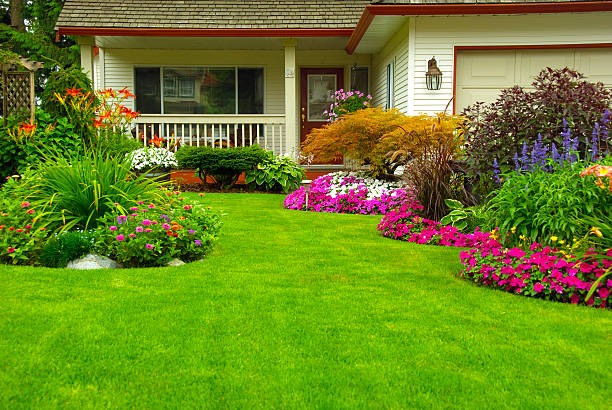
That's what total property care really means: not more services, but a different relationship with your property. The yard stops being a list of pending reactions and becomes something that's simply handled — looking right on random Tuesdays, compounding in the right direction, and asking nothing of your weekends. For most homeowners who make the switch, the surprise isn't the results. It's how much mental space the old to-do list was quietly occupying.

Make your property somebody's whole job. Kangaroo Outdoor Solutions' Complete Maintenance Program delivers total property care — lawn, turf, irrigation, beds, shrubs, and seasons on one coordinated schedule, customized to your home. Build your quote today and see what handled feels like.