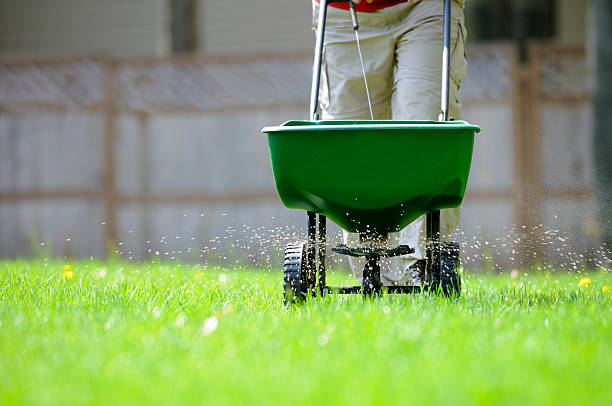
Walk the fertilizer aisle in any Texas garden center and you'll find plenty of answers about what to buy — and almost nothing about the question that actually decides your results: when. Fertilizer timing is the most consequential variable in lawn feeding, and it's the one homeowners get wrong most often, because the right windows don't match intuition, don't match the retail displays, and don't match the advice written for northern lawns.
Texas lawns are warm-season grasses — Bermuda, St. Augustine, Zoysia — running a calendar that's nearly opposite to the cool-season lawns most national advice describes. Feed them on the wrong schedule and the fertilizer feeds weeds, burns turf, or washes away unused. Feed them on the right one and every application lands where a hungry, growing plant can turn it into density and color. Here's the complete Texas fertilization calendar — when to feed, what each window accomplishes, and the timing mistakes that waste the most money.
One principle governs all fertilizer timing: feed the lawn when it's actively growing and can actually use the nutrients. Warm-season grass grows on soil temperature — dormant through winter, waking in spring, running hard through the heat, and banking energy in fall before going back to sleep. The feeding calendar simply follows that metabolism. Every correct window below is a moment the grass is eating; every classic mistake is an application landing while it isn't.
The first feeding of the year is also the most commonly mistimed. The intuition — fertilize early to help the lawn wake up — is exactly backwards. A lawn still mostly dormant can't absorb the application; the nutrients feed the winter weeds that are actively growing, wash through the root zone unused, or push premature tender growth that a late frost then damages.
The correct spring window opens after genuine green-up — when the lawn is visibly growing and has been mowed a couple of times, typically mid-spring in North Texas, adjusting with the year's weather. That feeding fuels the real growth surge: density building, color deepening, the lawn thickening into summer shape. Fed at the right moment, the spring application is the year's most visible feeding — the one where the lawn seems to change color within weeks.
Summer is where Texas feeding gets technical, because two truths collide: the lawn is growing hard and consuming steadily — it genuinely needs summer nutrition — and summer is when fertilizer can do its worst damage. Fast-release nitrogen applied in extreme heat, especially on a dry or stressed lawn, causes fertilizer burn: the scorched streaks and patches that mark DIY summer feedings across every neighborhood.
The professional approach threads it: controlled-release products that feed gradually instead of dumping, measured rates that sustain the turf without forcing surge growth, and timing that respects conditions — never applying onto drought-stressed turf mid-heat-wave. Done right, summer feedings are why program lawns hold their color through August while unfed lawns fade. Done wrong, they're why July is burn season.
Here's the window most homeowners skip and every professional protects: the early fall feeding, and it matters more than any other application on the calendar.
Fall is the warm-season lawn's recovery and banking season. As the worst heat breaks but soil stays warm, the grass rebuilds the density summer stress thinned — and, critically, stores carbohydrate reserves in its root system. Those reserves are the fuel for next spring's green-up: the lawn that wakes fast, green, and thick in April is spending what it banked in October. The fall feeding is the deposit.
The window has a hard deadline — the feeding must land while the lawn is still actively growing, weeks before dormancy. Feed too late and the dormant grass can't absorb it; the application feeds winter weeds instead. This deadline moves with the weather every year, which makes it exactly the kind of window a scheduled turf program hits and a busy homeowner's calendar misses. Skip the fall feeding and next spring starts on an empty tank — the slow, pale green-up that no springtime product can fix, because the problem happened the previous autumn.
Dormant warm-season lawns don't eat, so winter feeding is money spread on sleeping grass — wasted at best, weed-feeding at worst, since the henbit and winter annuals are the only things growing. The winter lawn program is weed control, not nutrition. The one caveat: the "winterizer" products marketed in fall are designed around cool-season northern grasses; on Texas lawns, the fall feeding described above, landed before dormancy, is the correct version of winter preparation.
Notice the pattern across the calendar: the same bag of fertilizer can be the year's best application or its most wasted one, purely depending on when it lands. Right product in the wrong month feeds weeds, burns turf, or washes away; modest product in the right window builds visible, compounding results. And the right windows aren't calendar dates — they move with soil temperature and weather every single year, which is the honest explanation for the results gap between program lawns and aisle-shopping lawns. The program isn't applying secret products. It's landing ordinary ones in windows that someone is actually tracking — the after-green-up spring feeding, the heat-safe summer support, the deadline-beating fall deposit — six to eight times a year, every year, while integrating the weed control that keeps the nutrition feeding grass instead of invaders.
That's the whole answer to when to fertilize your lawn in Texas: when the grass is eating, with what the season allows, before the windows close. Get the timing right and the products almost take care of themselves.

Never miss a feeding window again. Kangaroo Outdoor Solutions' Turf Control Program lands every fertilization and weed treatment in its right window, all year, tuned to your grass and our Texas seasons. Build your quote today and put your lawn's nutrition on schedule.