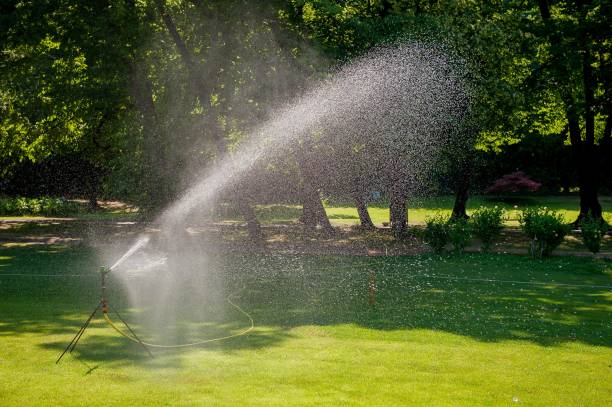
Nobody skips oil changes on the argument that the car still drives. Yet the equivalent logic runs sprinkler systems all over North Texas: the system turns on, water comes out, therefore it's fine — and years pass without anyone actually examining what the machine is doing. Meanwhile the system drifts, part by part, into a state its owner would never accept if they could see it: heads misaimed, coverage gapped, a valve weeping around the clock, a controller running a schedule nobody remembers setting.
The seasonal checkup exists because irrigation systems have a specific, unusual property: they degrade invisibly and fail expensively. Here's the full case for putting your sprinkler system on a regular inspection rhythm — why the drift is inevitable, why you'll never see it without looking, and what a proper checkup actually catches.
Sprinkler systems don't stay tuned, because everything around them is in motion. Heads sit at ground level, where mower decks bump them, tires roll near them, feet knock them, and soil settles around them — each contact nudging alignment, and dozens of small nudges per season adding up to heads confidently watering fences and driveways. Nozzles clog gradually on sediment and mineral scale, patterns distorting one gap at a time. Valves wear toward the day they stick. The landscape itself changes — shrubs grow into spray paths, beds expand, new features block old coverage — while the system keeps watering the yard it was designed for years ago. And the weather swings that define North Texas — freeze events, heat, soil movement in expansive clay — stress every buried fitting and exposed component through every cycle of the year.
None of this is failure in the dramatic sense. It's drift — the steady accumulation of small wrongness that turns a well-designed system into a badly performing one without a single identifiable breaking point. Drift is why a system that was perfect at installation is measurably imperfect every season after, and why tuned systems are always systems someone regularly tunes.
Here's the property that makes irrigation unique among home systems: it operates almost entirely unwitnessed. The schedule runs before dawn, precisely so watering finishes in the efficient early-morning window — which means the geyser, the misaimed head, the sputtering pattern, and the zone that never fired all perform to an empty audience, every cycle, indefinitely.
The failures do eventually report — but through slow, ambiguous messengers. The dry crescent takes weeks to brown, and when it does, it looks like heat stress or disease. The stuck valve's soggy zone reads as a drainage problem. The water bill's climb gets blamed on summer rates. By the time the lawn or the meter files a report clear enough to act on, the underlying problem has typically run for a month or more — wasting water the entire time and, in summer, killing turf that a two-minute repair would have saved.
The seasonal checkup breaks the invisibility by force: every zone run in daylight, watched end to end, by someone who knows what right looks like. It's the one reliable moment the system performs for an audience — and most of a checkup's value is simply that: witnessed operation, on a schedule.
The professional seasonal inspection is systematic — and its checklist maps exactly onto the ways systems drift:
Every zone runs while trained eyes watch: heads confirmed rising, spraying, and retracting; patterns checked for clogs and wear; alignment corrected so water lands on turf instead of pavement; and coverage verified against the landscape as it exists now, not as it was installed. The valves get tested in both directions — the zones that won't fire and the zones that won't stop, both diagnosed at the box. Pressure gets read for the leaks it reveals: the whole-zone weakness of a lateral break, the always-on loss of a main-line problem. The drip zones — the invisible bed lines that fail silently and announce themselves through dying shrubs — get their deliberate emitter-by-emitter check, the inspection they never receive casually. And the controller gets its audit: the schedule rebuilt for the season, forgotten programs purged, the rain sensor tested, start times confirmed for the early-morning window.
Then the part that converts inspection into value: the repairs happen — the cracked head replaced, the nozzle swapped, the arc realigned, the valve rebuilt — in the same visit the problems are found, while every one of them is still in its cheap phase.
Two checkups anchor the calendar. The spring startup is the big one — the system returning to duty after a winter of dormancy and freeze exposure, with the backflow preventer checked as pressure returns and every zone inspected before summer hands out its verdicts. The second lands ahead of or during peak season, when demand is highest and tolerance for failure is zero — because a coverage gap that's cosmetic in April kills turf in July within days. Between them, the smaller seasonal touches: the fall ramp-down that stops summer schedules from drowning the autumn lawn, and the winter protections before the freezes.
Run that rhythm and the system's story changes completely: the drift gets corrected before it compounds, the failures get caught before the lawn pays for them, the water bill stops funding invisible waste — and the sprinkler system does, quietly and reliably, the one job everything else in the yard depends on. The car analogy holds all the way down: the checkup was never about whether the machine still runs. It's about what it's costing while it does.

Put your system on the schedule it deserves. Kangaroo Outdoor Solutions provides seasonal irrigation checkups and repairs — every zone watched, every issue fixed in the same visit, all year long. Build your quote today and stop watering blind.