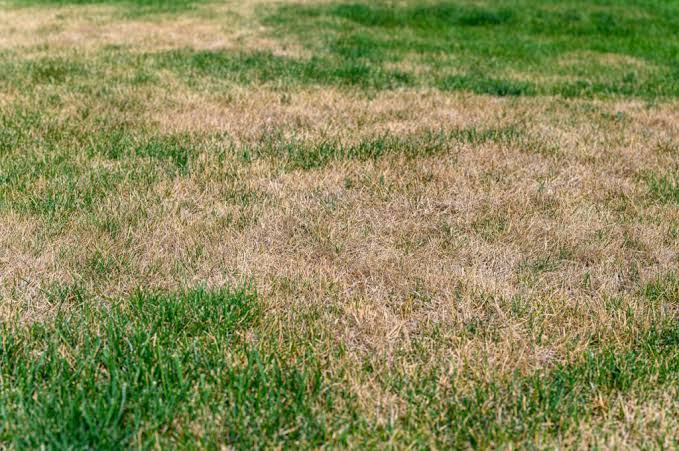
It happens every summer across North Texas. Sometime around late June or July, a homeowner walks out to grab the mail and notices it: the lawn that looked perfect in May is turning brown. Maybe it's a few patches. Maybe it's whole sections. Maybe it's the entire yard slowly fading from green to tan.
The first instinct is almost always the same — water more. But here's the problem: more water is only the right answer for one of the six most common causes of brown grass in summer. For the others, extra watering does nothing, wastes money, or actually makes things worse.
If your grass is turning brown in summer, this guide will help you play detective. We'll walk through the six most common causes for North Texas lawns, how to tell them apart, and what actually fixes each one.
Before you blame heat, disease, or bugs, check your sprinkler system — because in our experience, uneven irrigation coverage is the number one cause of brown patches in North Texas lawns.
Irrigation-related browning shows up in patterns: crescents, strips, circles, or corners that stay brown while surrounding grass stays green. The shape of the dead zone often traces the shape of the coverage gap. Common causes include:
Grab a screwdriver and push it into the brown area, then into a green area. If it slides into the green soil but won't penetrate the brown spot, that area is bone-dry — coverage is your problem. You can also run each irrigation zone manually and simply watch: heads that sputter, spray weakly, or don't pop up will reveal themselves in minutes.
Repair or adjust the affected heads, fix leaks, and correct coverage. This is exactly why routine irrigation maintenance pays for itself — a $20 head replacement caught early beats resodding a dead section of lawn later.
Sometimes brown grass is exactly what it looks like: a lawn struggling against 100-plus-degree heat and weeks without rain.
Drought stress tends to be widespread rather than patchy, showing up first in the hottest, most exposed areas — along driveways and sidewalks, on slopes, in the middle of the yard away from shade. Early warning signs come before browning: grass takes on a dull blue-gray tint, blades fold or curl, and footprints stay visible in the lawn long after you walk across it.
Here's something many homeowners don't know: Bermuda grass responds to extreme drought by going dormant, not dying. It shuts down, browns out, and waits — then greens back up when water returns. A drought-dormant Bermuda lawn can look dead and be perfectly alive at the root.
Water deeply and infrequently — two to three good soakings per week in the early morning beat daily light sprinkles, because deep watering trains roots downward. Raise your mowing height in summer so longer blades shade the soil and roots. And keep the lawn strong year-round with proper fertilization, because a well-fed lawn with deep roots shrugs off heat that devastates a weak one.
If your brown spots are circular, spreading, and appeared during humid or wet conditions, you may be looking at fungal disease rather than drought.
Brown patch — one of the most common turf diseases in North Texas, especially in St. Augustine — creates roughly circular patches that can grow from inches to several feet across, sometimes with a yellowish or smoky ring at the edge. Grass blades pull free easily at the base and look rotted where they meet the soil. Fungal problems often show up after stretches of humidity, heavy rain, or — critically — overwatering, especially at night.
This is the case where the instinctive fix makes everything worse. Fungus thrives on moisture. If your browning is fungal and you respond by watering more, you're feeding the disease.
Correct the watering schedule (early morning only, deep and infrequent), improve airflow and drainage, and treat with appropriate fungicide applications. A professional turf control program helps here twice over: proper fertilization keeps turf strong enough to resist disease, and trained eyes on your lawn regularly mean fungus gets identified and treated early — while the patch is one foot wide, not ten.
If brown patches lift up like loose carpet, stop reading and go check for grubs.
White grubs — the larvae of June beetles — live in the soil and eat grass roots. With the roots severed, the turf dies and detaches: you can literally peel affected grass back like a rug. Peel back a section and you'll often find the culprits themselves — plump, C-shaped white larvae in the top few inches of soil. Increased activity from armadillos, skunks, or birds tearing at your lawn is another tell: they're digging for the grubs.
Armyworms are the other major North Texas turf pest — they arrive in late summer waves and can visibly chew a lawn down in days, leaving browned, ragged areas that spread fast.
Confirmed grub or armyworm activity calls for targeted insecticide treatment, timed to the pest's life cycle. After treatment, the lawn needs water and fertility support to regrow roots and recover — another place where a coordinated maintenance program shortens the road back to green.
Sometimes the lawn isn't sick at all — it's been cut wrong.
Scalping — cutting the grass too short — exposes brown stems and even bare soil, producing tan, ragged areas immediately after mowing. It happens most on uneven ground, on high spots, and when mowing infrequently (cutting off half the blade at once violates the one-third rule and shocks the turf). Dull mower blades add to the damage by tearing grass instead of cutting it, leaving frayed tips that brown across the whole lawn within a day or two.
Raise the deck — especially in summer, when taller grass means cooler soil and deeper roots. Keep blades sharp, mow frequently enough that no cut removes more than a third of the blade, and let clippings return nutrients to the soil. This is one of the quiet advantages of professional weekly lawn maintenance: correct height, sharp blades, and consistent frequency, every single visit.
Small, isolated dead spots with sharp edges often trace back to something concentrated hitting that exact spot.
Flush fresh dog spots with water to dilute the nitrogen; badly burned spots may need the dead material raked out and the area re-established. For fertilizer burn, water deeply to move salts out of the root zone — and next season, let calibrated, professionally timed applications remove the risk entirely.
Brown grass in summer isn't one problem; it's six different problems wearing the same disguise. The right fix starts with the right diagnosis — and the fastest path to both is having a professional team that already knows your lawn, sees it every week, and can correct irrigation, turf health, and mowing all at once.

Kangaroo Outdoor Solutions helps homeowners across Weatherford, Hudson Oaks, Aledo, and surrounding North Texas communities keep lawns green through the toughest months — with weekly maintenance, expert turf control, and irrigation repairs handled by one reliable team. Build your quote today and let's get your lawn back to green.