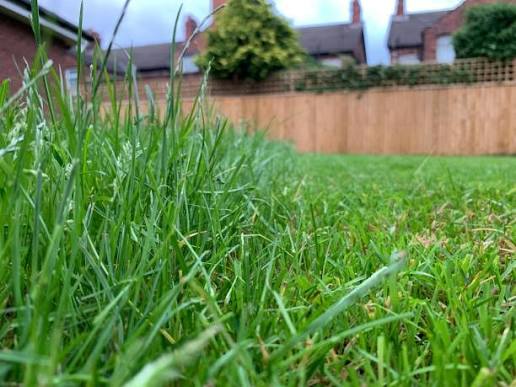
It's the quiet competition nobody admits to: every spring, the whole street watches whose lawn wakes up first. And every spring, some homeowner stands in a stubbornly brown yard in mid-April, staring across at a neighbor's already-green carpet, asking the question that brings people to this article: why is my lawn still brown?
Sometimes the answer is "nothing's wrong — wait two weeks." Sometimes it's a fixable condition quietly throttling the green-up. And occasionally it's the first visible evidence of real damage from last year. The skill is telling those apart — because the right response ranges from patience to treatment to repair, and the wrong response (usually panic-fertilizing) makes things worse. Here are the six reasons lawns green up slowly, how to identify yours, and what each one actually needs.
Warm-season lawns don't wake on a calendar date — they wake on soil temperature. Dormant Bermuda, Zoysia, and St. Augustine sit out winter as live root systems under brown top growth, waiting for the soil (not the air) to warm into their activation range. A few warm afternoons mean nothing if soil temps haven't caught up; a cold snap after green-up starts can pause the whole process mid-stream.
Green-up is also powered by stored fuel: the carbohydrate reserves the lawn banked in its roots last fall. Spring color is last autumn's savings account being spent — a fact that explains several entries below.
Now, the six suspects:
Before diagnosing disease, look at where the brown is. Lawns green up in a predictable geography: sunny, open, south-facing areas first; shaded, north-facing, and low-lying cold pockets last — because soil temperature varies across a single yard by surprising margins. The strip along the sun-baked driveway greens weeks before the zone shaded by the house or the fence line that holds morning frost.
The tell: the green-up pattern matches the sun map — brown where shadows live, green where sun hits. The response: patience. This is physics, not pathology, and it resolves as soil warms. (And your neighbor's faster lawn? Check their sun exposure before crediting their skill.)
Different grasses wake at different soil temperatures — and even different varieties of the same grass green up on different schedules. If your Zoysia sits brown while the Bermuda across the street glows, you're watching species biology, not a problem. The tell: uniform lateness across your whole (healthy) lawn, especially versus neighbors with different grass. The response: patience again — and knowing your grass type, which reframes the whole comparison.
Here's where the savings-account model bites: a lawn that skipped its fall feeding — or spent last autumn stressed, scalped, or buried under leaves — went into winter with thin reserves. Come spring, it has less fuel to spend on green-up: it wakes late, greens weakly, and fills in slowly, even under perfect spring conditions.
The tell: overall sluggish, pale, low-energy green-up without distinct dead patches — the whole lawn running at three-quarters speed. The response: support the spring it's trying to have (proper feeding once it's actively growing, good watering) — and circle this coming fall on the calendar, because the real fix for weak spring green-up is always the previous autumn. This is the multi-season logic that scheduled turf programs run automatically.
A lawn trying to green up through compacted soil or a thick thatch layer is accelerating with the parking brake on: spring rains run off instead of soaking in, oxygen can't reach waking roots, and the soil warms unevenly. Compacted zones — the traffic paths, the parking-adjacent strips — visibly lag the open lawn.
The tell: green-up that's patchy along use patterns (paths, play areas, edges) rather than sun patterns; water pooling or running off; the screwdriver test failing in the brown zones. The response: spring core aeration — perfectly timed anyway, and precisely the fix: opening the soil so water, air, and warmth reach the roots trying to wake. Compaction-lagged lawns often visibly catch up in the weeks after aerating.
Some browns aren't late — they're injured. Texas's occasional severe freezes can genuinely damage warm-season turf (St. Augustine is the most freeze-vulnerable of the big three; exposed and low-lying areas take it worst), and winter desiccation during long dry cold spells can hurt lawns that never got an off-season drink.
The tell: distinct dead zones that stay lifeless while everything around them greens — and the tug test: winter-killed turf pulls up with rotted, lifeless roots, versus dormant turf that holds firm. Give the lawn until late spring for the final verdict — apparent losses sometimes wake late from surviving roots. The response: genuine kill zones need repair (removal and re-establishment via sod, plugs, or Bermuda's own spreading recovery), and this is a solid moment for a professional assessment — distinguishing slow-wake from true loss saves both premature replacement and wasted waiting.
One more spring surprise: parts of what browns in late spring were never your lawn at all. Winter weeds — annual bluegrass especially — spend early spring impersonating healthy green turf, then die on schedule as temperatures rise, leaving brown patches exactly when your real lawn is greening. Homeowners see "my lawn greened up then died in spots"; the truth is "the impostors left."
The tell: brown patches appearing in late spring where suspiciously early green clumps used to be — often with the whitish seed heads of poa annua in the memory. The response: those bare spots are real turf gaps now (fill them before summer weeds apply) — and the prevention is fall pre-emergent, the same barrier that stops the whole winter-weed cycle. Add it to the autumn list next to the feeding.
Whatever your diagnosis, two universal cautions: don't panic-fertilize a brown lawn — feeding turf that isn't actively growing wastes product, feeds weeds, and can stress the wake-up (the spring feeding belongs after genuine green-up begins) — and don't scalp it green. The aggressive early-spring buzz cut "to help it along" removes the insulation over crowns right when late frosts still threaten. Mow normally, water sensibly, fix what's fixable (aeration, repairs), schedule what's preventable (fall feeding, fall pre-emergent) — and let soil temperature run the show it was always going to run.

Brown lawn, green neighbors, unclear why? Kangaroo Outdoor Solutions can diagnose your green-up — patience, aeration, repair, or program — and run the year-round schedule that makes next spring your fastest yet. Build your quote today and get your lawn back in the race.