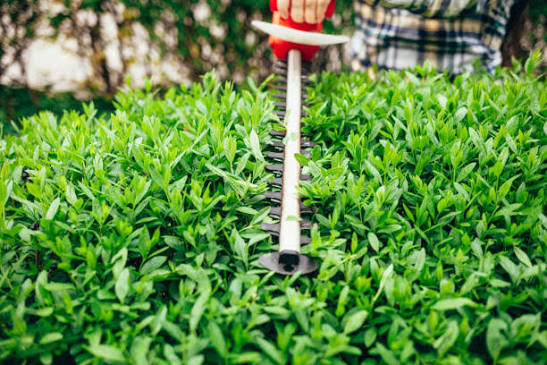
There's a lawn problem hiding in plain sight on thousands of properties: the lawn that looks vaguely stressed a day after every mow — a grayish-brown cast across the whole surface, tips that seem burned, a general tiredness that gets blamed on heat, water, or bad luck. The actual culprit rides on the mower deck. Dull blades are one of the most common and least diagnosed causes of chronic lawn stress, and the difference between sharp and dull shows up in every single cut, all season long.
Here's what blade sharpness actually changes, how to spot dull-blade damage on your own lawn, and why professional maintenance treats sharpening as a discipline rather than an afterthought.
A mower blade does one of two things to every grass plant it meets. A sharp blade slices — a clean cut through the blade tissue that seals quickly, loses minimal moisture, and heals within a day. A dull blade tears — it doesn't cut the grass so much as beat it off, leaving ragged, shredded, bruised tips on every plant in the lawn.
The consequences of tearing multiply across millions of grass blades. Torn tips bleed moisture the plant can't spare — a real tax in a Texas summer. The ragged wounds seal slowly, staying open longer to the fungal diseases that enter through damaged tissue. And the shredded ends die back and brown within a day of mowing, which is the source of that whole-lawn grayish cast: the lawn isn't sick, it's wearing a million tiny injuries, renewed every week.
Diagnosing dull-blade damage takes thirty seconds. A day after mowing, kneel down and look at individual grass tips. Sharp-blade cuts are clean and level — the tip looks sliced. Dull-blade damage is unmistakable: frayed, whitish, ragged ends, like the grass was torn rather than trimmed. If most tips look shredded, every mow your lawn receives is a stress event — and no amount of watering or feeding fixes what the next cut re-inflicts.
The from-the-porch version: if your lawn consistently looks worse a day or two after mowing than it did the day of, the blades are the first suspect.
Blade sharpness matters year-round and doubles in the heat. A lawn in July is already managing maximum stress — moisture loss, heat, hard growth — and torn tips add an open moisture leak across the entire surface at the worst moment. Summer is also when the browning shows most, because the stressed lawn can't outgrow the damage between cuts. It's why professional crews sharpen relentlessly through the peak season: the same lawn, cut with the same frequency at the same height, looks visibly different under sharp steel.
Frequency compounds the issue too. Blades dull with use — every mow, every sandy patch, every hidden stick takes an edge off. A blade that was sharp in March is not sharp in July without attention, and the homeowner mower that gets sharpened once a year, if ever, spends most of the season tearing.
On a professional maintenance route, sharpening is infrastructure. Commercial crews cut dozens of lawns a day, which dulls blades fast — so blade maintenance runs on a schedule measured in days and weeks, not seasons. The equipment arrives sharp because the operation depends on it: clean cuts are the visible difference between a professional result and a rough one, and companies that live on curb appeal can't afford torn turf.
For your lawn, that's one of the quiet, unbilled benefits of professional service: every cut, all season, is a clean cut. Combined with the rest of the weekly discipline — proper heights, seasonal adjustments, rotated patterns — it's a meaningful share of why maintained lawns hold their color and composure through months that rough up everyone else's.
And if you mow your own: put blade sharpening on the calendar at least twice a season, more with heavy use. It's one of the cheapest upgrades in lawn care — the same mower, the same lawn, and a visibly better result starting with the very next cut.

Give your lawn clean cuts every week. Kangaroo Outdoor Solutions provides complete lawn maintenance — sharp equipment, proper heights, and the weekly discipline that keeps turf healthy. Build your quote today and see the difference sharp makes.