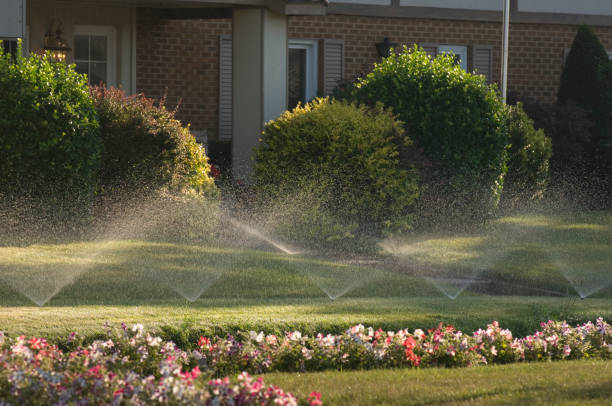
The broken sprinkler head is the most common repair in residential irrigation — the geyser in the zone, the cracked body weeping at ground level, the head that simply stopped rising. Most homeowners treat head damage as random bad luck, a cost of owning a system. It mostly isn't. Sprinkler heads break for a short list of very specific reasons, and once you know the list, a surprising share of the damage becomes preventable.
Here's what actually kills sprinkler heads — and the habits, adjustments, and maintenance moves that keep them alive.
The number one destroyer of sprinkler heads, by a wide margin, is lawn equipment. Mower decks clip heads that sit too high; wheels and tires crush the ones at the edge of drives and walks; trimmers whip the exposed risers along beds and borders. One pass, one crunch, one geyser.
The vulnerability is almost always height. Pop-up heads are designed to sit flush with the soil surface, rising only when pressurized — but soil settles, thatch builds, and heads shift over the years until some sit proud of the ground, right in the deck's path. Others sink until they're buried, which trades mower damage for a different failure. The prevention is a periodic height audit: heads reset flush to grade as the ground changes around them — a standard item in professional maintenance visits and one of the highest-value small adjustments a system gets. Professional mowing crews also learn a property's heads and work around them, which is a quiet perk of consistent-crew service: the crew that knows where every head sits stops breaking them.
The heads along driveways, parking edges, and the curb strip live dangerous lives. Car tires cutting the corner, the delivery truck on the lawn edge, the trailer swung wide — heads take vehicle weight far worse than turf does, and the driveway-line heads on most systems have been replaced more than once.
Prevention here is partly layout and partly hardware: vulnerable positions can be fitted with sturdier low-profile heads or swing-joint connections that let a head take impact by giving way instead of snapping its riser — the professional fix for the head that keeps getting killed in the same spot. If your system has a repeat-victim location, stop replacing the same part the same way and ask for the impact-resistant setup.
Texas winters take their share. Water trapped in heads and shallow lines during hard freezes expands and cracks bodies and fittings — damage that hides until spring startup, when pressure finds every winter casualty at once. The prevention is the winter discipline: schedules cut to dormant-season minimums so heads aren't charged on freeze nights, the backflow insulated, and — for severe events — the system shut down and relieved. The spring startup inspection then catches whatever winter managed anyway, while each repair is still cheap and the season hasn't leaned on the system yet.
Heads are mechanical parts in a dirty environment, and they wear: seals that let water bypass around the riser, springs that stop retracting, internals scoured by sediment until patterns distort. Wear shows gradually — the head that leaks at its base while running, the one that stays up after the zone stops, the spray that's lost its shape — and gradual is the trap, because slowly failing heads waste water and degrade coverage for months before anyone calls them broken.
The prevention is simply attention on a schedule: the monthly daylight zone-run that catches heads misbehaving early, and the seasonal professional inspection that tests, cleans, adjusts, and replaces at the component level. Worn heads caught early are five-minute swaps; worn heads ignored become the brown patch that finally announces them in July.
Read back the list and the theme is consistent: sprinkler heads rarely just break — they get broken by preventable contact, preventable freezing, or preventable neglect. The counter-habits are modest: heads kept flush to grade, tough hardware in the punished spots, winter discipline, and eyes on the system monthly and professionally each season. Systems maintained that way still lose a head occasionally — it's a hard life at ground level — but they stop bleeding them, and the repair line on the irrigation budget shrinks to match.

Stop replacing the same heads every year. Kangaroo Outdoor Solutions provides complete irrigation maintenance and repairs — height audits, impact-resistant fixes for problem spots, and seasonal inspections that catch wear early. Build your quote today and keep your heads in the ground and working.