Somewhere in your garage or on an exterior wall hangs a gray plastic box with a dial, some buttons, and total authority over the health of your lawn. It's your irrigation controller — and if you're like most homeowners, you've opened it maybe twice: once when you moved in, and once when something went wrong.
Here's the uncomfortable truth about that box: it's probably running settings nobody has thought about in years — a schedule programmed by an installer, a previous owner, or a past version of you, executing the same instructions through every season, rain event, and heat wave since. And because the controller runs before dawn, its mistakes are invisible: you never see the zone that runs twice, the 5-minute rotor cycle that waters nothing, or the program still set for a landscape that's changed.
This is the guide to finally decoding that box — the concepts every controller shares, the settings that matter, and the handful of mistakes hiding in most garages right now.
Brands and models vary, but under every dial and app, irrigation controllers speak the same three-word language:
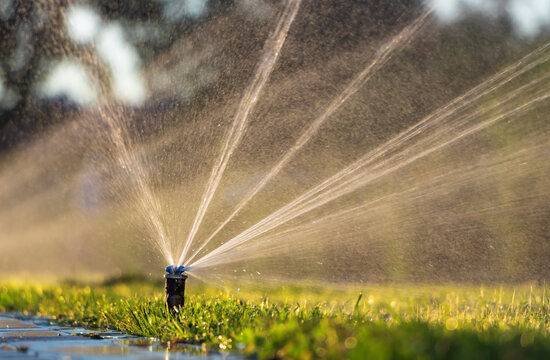
A zone is a group of sprinkler heads that run together on one valve. Your yard isn't watered all at once — it's watered zone by zone, in sequence, because your water supply can only pressurize so many heads at a time. A typical home runs anywhere from four to twelve-plus zones: front lawn, back lawn sections, side strips, bed drip lines, each with its own number on the controller.
The first thing every homeowner should do: learn your zone map. Run each zone manually for a minute and write down what it waters — "Zone 1: front lawn rotors. Zone 4: backyard sprays. Zone 6: bed drip." Ten minutes of walking, and the gray box stops being a mystery. (Tape the list inside the controller door; future-you says thanks.)
Run time is how long each zone waters per cycle — and here's where the single most important controller concept lives: different zones need very different run times, because different head types deliver water at wildly different rates.
The classic controller mistake — found in garages everywhere — is every zone set to the same duration. Ten minutes across the board means the rotor zones are being lightly teased (shallow watering, shallow roots) while the spray zones are drowning and running into the street. If your controller shows identical times on every station, that's your first fix.
Start time is when a program begins — and the controller then runs your zones in sequence from that trigger. Two settings hide here that quietly matter:
Beyond the basics, three controller features cause an outsized share of mystery problems:
Most controllers run several independent programs — typically labeled A, B, and C — each with its own start times, days, and zone durations. The intent is flexibility (lawn zones on program A, drip beds on program B). The reality in many garages: a forgotten program still active from years ago, silently double-watering the yard. If your lawn seems overwatered despite reasonable settings — or the water bill doesn't match the schedule you think you're running — check every program letter for stowaway start times. It's one of the most common finds in a professional controller audit.
Many controllers include a seasonal adjustment — a master percentage that scales every run time up or down (set 50%, and every zone runs half its programmed time). Used well, it's the easy lever for matching the seasons: full time in peak summer, dialed down through spring and fall, minimal in winter. Ignored — which is the norm — it either sits at 100% year-round (overwatering three seasons) or was set low once and forgotten (starving the lawn in July). Find yours, and make it the one dial you touch quarterly.
A rain sensor is a small device that pauses the system after meaningful rainfall — the difference between a controller and a smart decision-maker. Two questions worth answering today: do you have one, and does it still work? (They fail quietly with age, leaving systems that cheerfully water mid-thunderstorm — the neighborhood's most public irrigation embarrassment and a pure waste of water.) Modern smart controllers go further, adjusting to weather data automatically — but even the humble rain sensor, functioning, pays for itself.
Ready to open the box? Here's the professional walk-through, homeowner edition:
The controller audit is genuinely homeowner-doable — but it has limits worth respecting. Run times ultimately need calibrating to what each zone actually delivers (the measured-output work behind real precision), settings need re-tuning as seasons change, and the audit regularly uncovers the deeper issues — a zone that won't fire, pressure that's dropped, coverage gaps browning the turf — that live in valves, wiring, and heads rather than in the box. That's the natural handoff point: professional irrigation maintenance covers the controller and everything downstream of it — zone-by-zone inspections, repairs, seasonal reprogramming — so the gray box and the system it commands are finally telling the same story.

When did anyone last look inside your controller? Kangaroo Outdoor Solutions provides complete irrigation maintenance — controller programming, seasonal adjustments, zone inspections, and repairs — so your system runs right all year. Build your quote today and put the gray box in expert hands.